Porcelain or composite veneers: comparing the options

Getting the perfect smile is a very common desire, and thanks to modern dental aesthetics, it's more accessible than ever. If you're thinking about improving the look of your teeth, it's very likely you've come across the great doubt: Are porcelain veneers or composites better?
The short answer is that there is no “better” option in absolute termsbut a more appropriate option for You In this article we break down the key differences to help you decide, although remember that the opinion of a professional is irreplaceable.
Looking for a trusted dentist in Bizkaia? In ODONTOFAMILY We have clinics located in Bilbao and Las Arenas (Getxo). We are specialists in integral dentistry, orthodontics, dental aesthetics and implantology. Our team offers you personalized treatments with the most advanced technology. If you live nearby and need a review, ask for your first evaluation appointment with us!
Book your visit in ODONTOFAMILY
What are veneers dental?
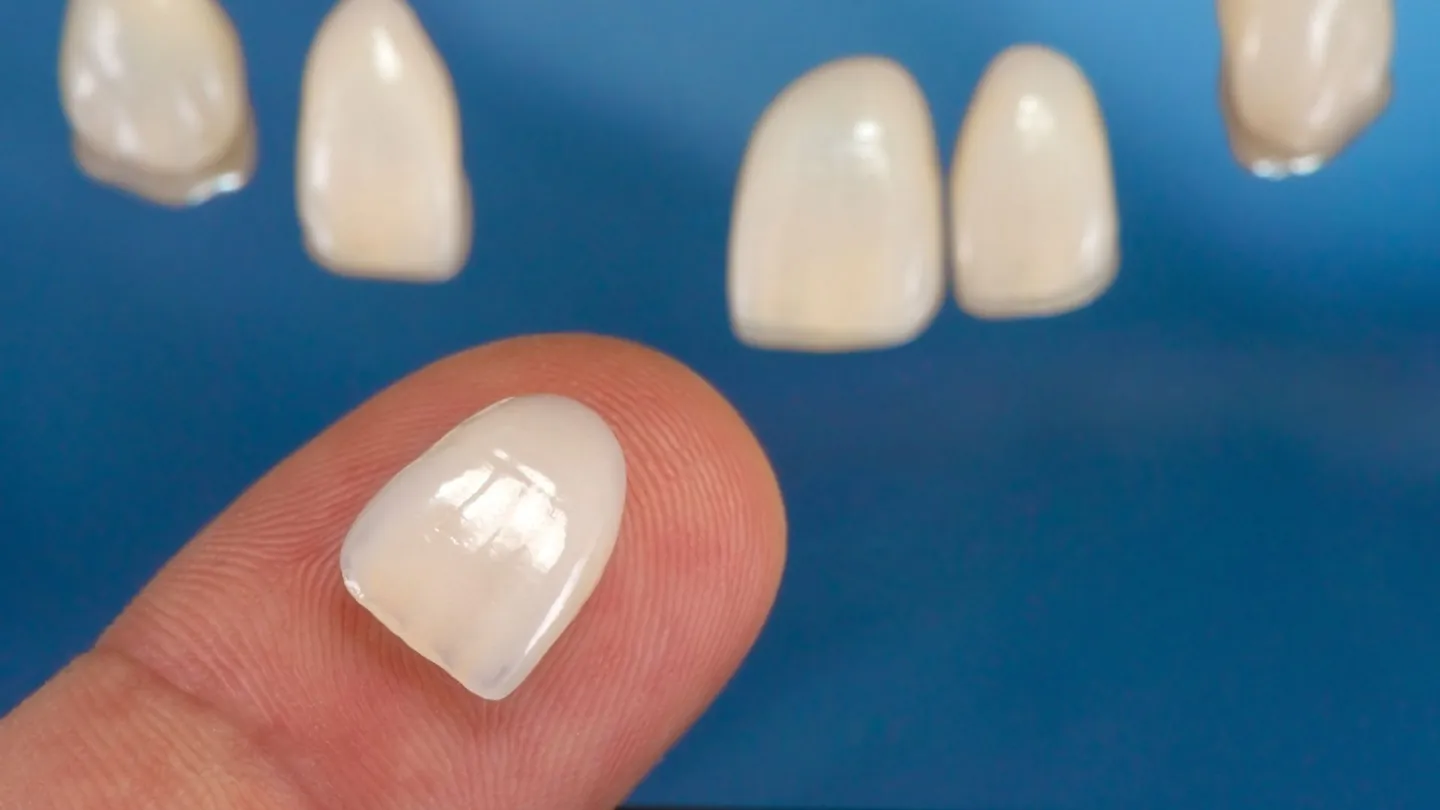
The dental veneers are fine, tailor-made sheets that stick to the visible face of the tooth. Think of them as a “mask” or “contact lens” for your teeth. Their main objective is purely aesthetic: they allow correcting imperfections such as:
- Stained or discoloured teeth.
- Tooths worn or broken.
- Spaces between teeth (diasthemas).
- Slight malfeasances.
How do you get your veners dental?
The process varies slightly depending on the material, but usually follows these steps:
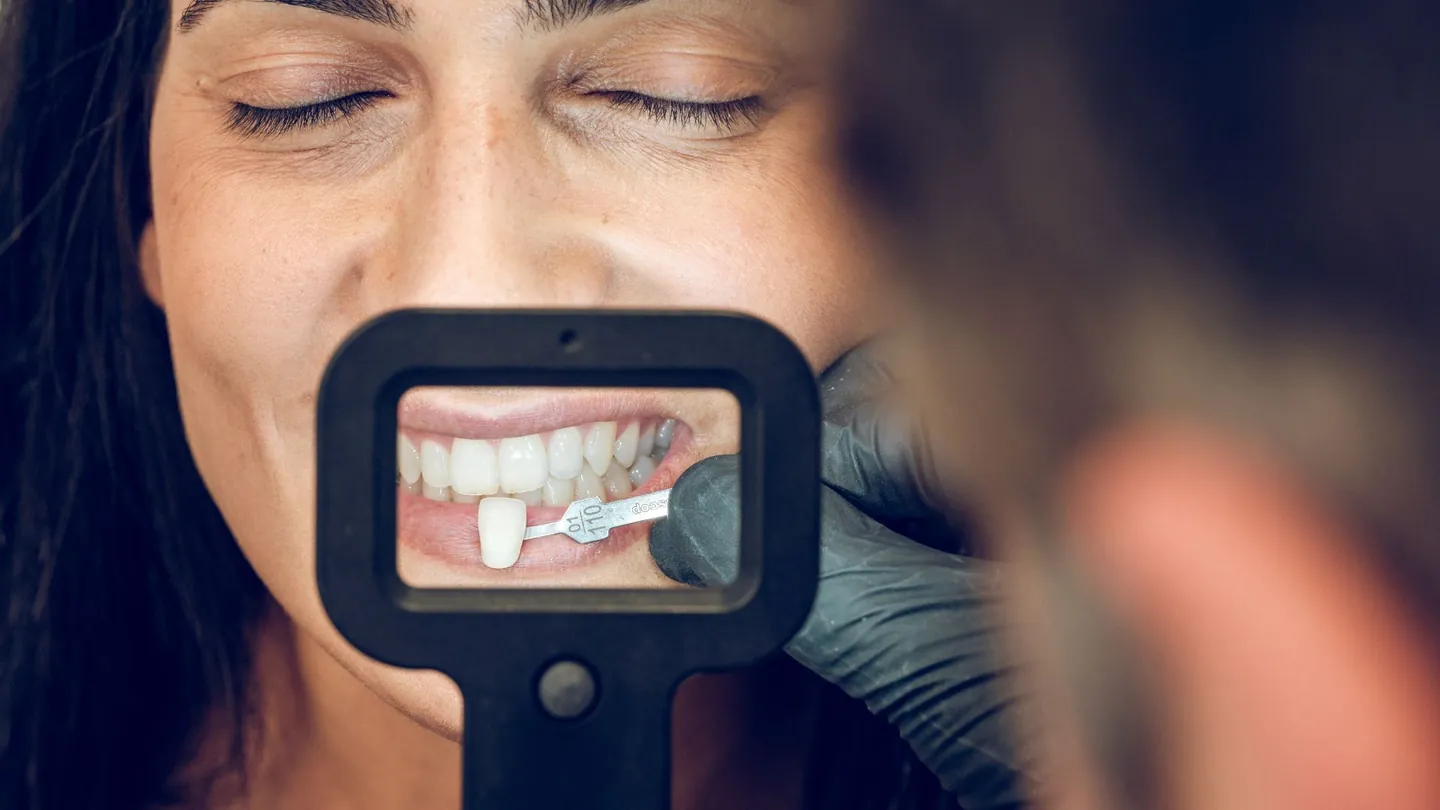
- Smile Diagnosis and Design: It is the most important phase. We scan your mouth and plan how the final result will be.
- Preparation: In some cases a minimum enamel carving is necessary so that the vener tooth does not swell.
- Placement: The veners tooth stick one at a time with a special high strength cement.
Would you like to see how your smile would look before we start? At our clinic we performed digital designs to visualize the final result before touching any teeth.
dental veneers advantages
- Immediate improvement: They turn the smile into very few sessions.
- Natural results: They blend in with the rest of the teeth.
- Biocompatible: Materials are well tolerated by gum.
dental veneers disadvantages
- Sensitivity: There may be a slight transient sensitivity after placement.
- Irreversibility: In the case of dental veneers that require carving, the process is irreversible (you should always wear dental veneers).
dental composite veneers What are they?
Composite veneers are manufactured with a synthetic resin (similar to that used for aesthetic fillings) that is modeled directly on the patient's tooth. They are a fantastic solution for mild or moderate corrections.
dental veneers of composite advantages
- Quick: They are often performed in a single session in our clinic.
- Minimally invasive: Rarely do they require tooth carving.
- Reparatable: If splintered, they can be repaired easily in the consultation without needing to change the entire veneer tooth.
- Reversible: Not touching only the enamel, they are a reversible treatment.
dental veneers of composite disadvantages
- Color stability: Over time (and consumption of coffee, wine or tobacco) may lose shine or be slightly dyed.
- Aesthetics: Although they are very pretty, porcelain best mimics the natural translucency of the tooth.
composite dental veneers duration
With good maintenance and regular visits to our clinic for polishing, they can last between 5-7 years in perfect condition.
tooth porcelain veneers What are they?
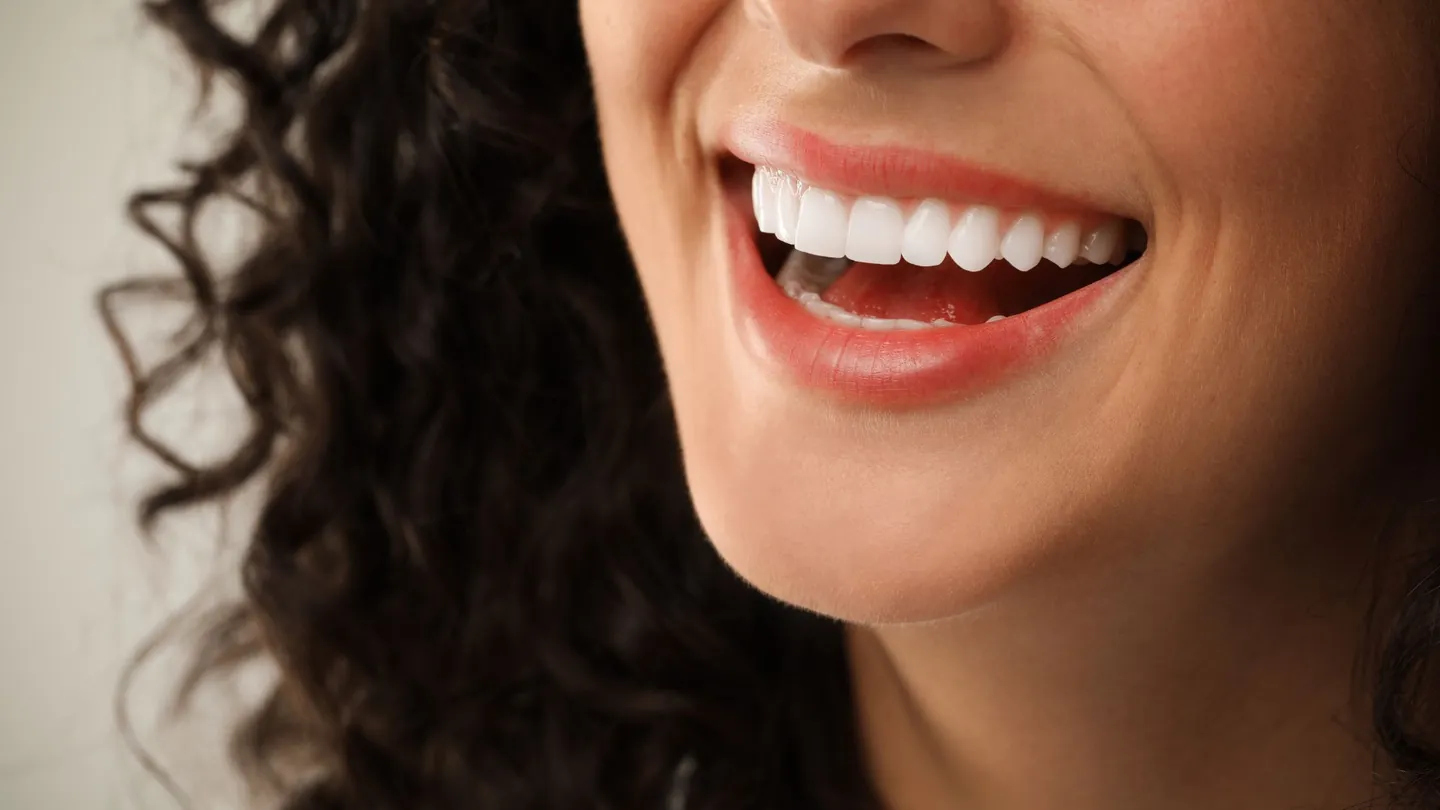
Porcelain (or ceramic) veneers are ultrafine foils made in a dental laboratory. They are the “premium” option of dental aesthetics due to their optical and physical properties.
dental porcelain veneers advantages
- Upper aesthetics: Porcelain perfectly mimics the brightness, texture and translucency of natural enamel.
- Resistance to stains: Porcelain is not porous, so it is not dyed with coffee or wine. The color remains stable for life.
- Hardness: They are more resistant to fracture than the composite.
dental porcelain veneers disadvantages
- Longer process: They require at least two sessions (measurement and placement).
- Reparation: If a porcelain veneer tooth breaks, it cannot be repaired; a new one must be made.
- Irreversible: They usually require minimal tooth preparation.
dental porcelain veneers duration
They are a long-term solution. With proper hygiene, they can last 10 to 15 yearsAnd even more.
How much do the veners cost?
The price is one of the determining factors, but it is difficult to give an exact figure without seeing the patient, since it depends on the complexity of the case and the number of teeth to be treated.
dental composite price veneers
They are the most economical option. When performed directly in clinic and not requiring laboratory, the cost is lower. They are ideal for tighter budgets or young patients.
dental porcelain veneers price
They have a higher cost due to the material, the laboratory’s craftsmanship and its superior durability. However, since it is a very long-term investment, many patients consider the value for money to be excellent.
non-carved veneers
Are you afraid they'll touch your teeth? micro-fine or “unprepared” veneers. Porcelain foils are so thin (like a lens) that in many cases do not need to blend the original tooth.
Not all patients are candidates for this technique (depends on the position and color of your teeth). Ask for your valuation appointment And we'll confirm if you're fit for uncarved veneers.
How to take care of your veners teeth to last longer?
Whether you choose composite or porcelain, veneers do not require complicated “special” care, but good habits to maximize their service life. At our clinic we always give these recommendations to our patients:
- Strict hygiene: You should brush your teeth 3 times a day and use floss. Having a veneers tooth doesn't mean that your natural tooth underneath can't have cavities if you don't take care of it.
- Beware of very hard foods: Although resistant, avoid biting ice, shellfish shells, bones, or opening containers with your teeth. Act with common sense, as you would with your natural teeth.
- Unloading Férule: If you squeeze your teeth at night (bruxism), it is essential use a discharge splint to sleep. This will protect ceramics or composite from pressure fractures.
- Periodic revisions: Come visit us at least once a year. In the case of the composite, we will perform a professional polishing to return the original shine and look fresh.
Frequently Asked Questions
What are veneers dental for?
They serve to “make up” the smile permanently. They solve problems of color, shape, size and position of the teeth, achieving a harmonic aesthetic.
Can the veners be bleached?
No. Neither the composite nor the porcelain change color with whitening. If you want the whitest teeth, we must perform whitening before to design your dental veneers to match the tone.
When is it advisable to get dental composite veneers?
They are ideal for young patients (under 18-20 years), for small corrections (a broken edge, a slightly turned tooth) or when looking for an economical and reversible solution.
When is it advisable to get dental porcelain veneers?
They are recommended for complete transformations of the smile, in cases of severe staining (such as tetracyclines) that the composite cannot cover, or for patients who seek maximum aesthetics and durability without worrying about maintaining the color.
Can you eat everything with dental veneers?
Yes, you can lead a completely normal life and enjoy the food. However, we recommend caution when biting directly with the front teeth very hard foods (such as whole apples, very hard bread sandwiches or seafood). It is better to chop these foods before eating them to avoid a lever effect that can take off or chip the veiner tooth.
What if I have bruxism?
Bruxism does not prevent you from getting dental veneers, but it does require extra protection. If you grind your teeth, we will make you a Download splint This will dampen the strength of your jaw and prevent the veners from breaking or wearing prematurely.
Will it be noticed that I have “pussy” teeth?
Not at all. The objective of modern dental aesthetics is not to put “nuclear white” and flat teeth, but to imitate nature. In our clinic we work with materials that have the same translucency and texture as real enamel. Digital Design by Smile, we choose the way that best harmonizes with your facial features so that the result is 100% natural.
Does it hurt to get dental veneers?
It's a very undisturbed treatment.
- Composite: It does not usually require anesthesia or carving, so it is totally painless.
- Porcelain: If it is necessary to prepare the tooth minimally, we use local anesthesia (as in a filling), so you won't feel anything during the process. After placement, you may notice a slight sensitivity to the cold that goes away in a few days.
General oral health information. Your dentist’s assessment is needed to tailor any recommendation to your individual circumstances.
Keep reading the blog