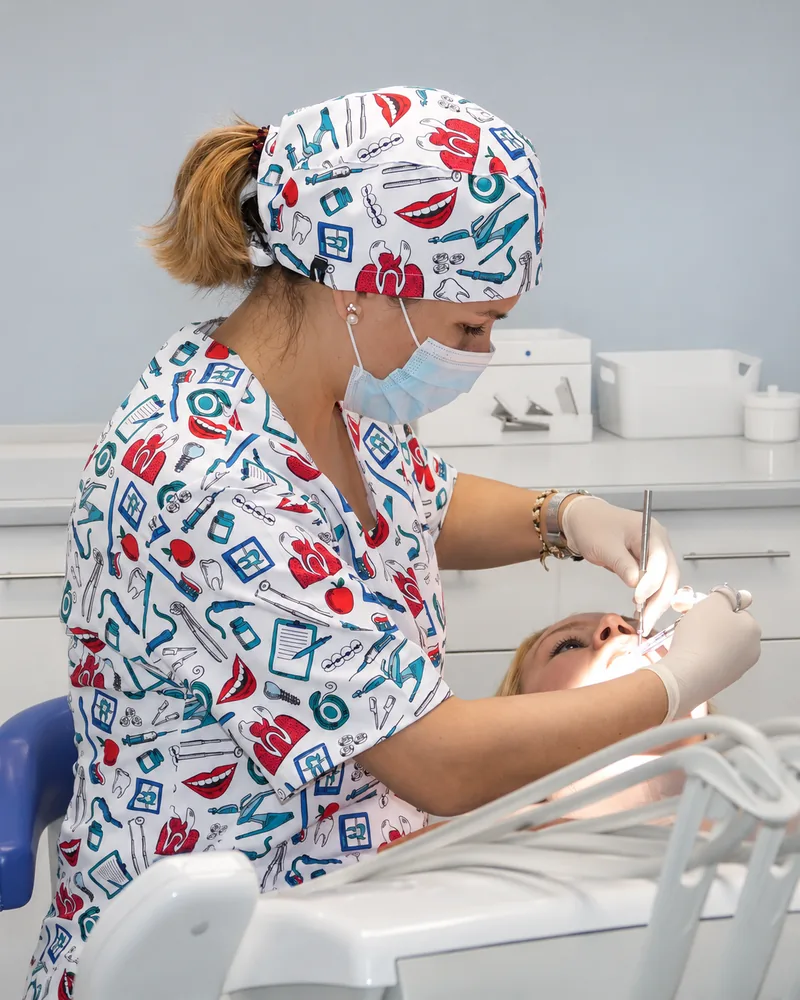
Removing tartar from teeth

How to remove tartar from your teeth?
If you've asked yourself how to remove tartar from your teethYou've probably already noticed that rough texture in your mouth or the dark spots that overshadow your smile.
What is tartar?
To know how to remove tartarThe tartar (also known as dental calculus) is a hard, porous substance that is formed when the plaque in the teeth mineralizes.
The plate is a sticky and colourless film composed of bacteria, food remains and saliva. If this plate is not completely removed with brushing and flossing in the first 24-48 hours, it is hardened by the accumulation of mineral salts of saliva, forming the tartar. Once calcified, the tartar adheres firmly to the enamel and tooth root, and can no longer be removed with the conventional toothbrush, no matter how strong you rub.
Types of dental tartar
Not all tartar is the same. The location defines the type, and the type determines the severity of the necessary treatment:
Sarro supragingival
It is the most visible. It is located above the gum line. It is usually yellowish white or brown. If you notice that your teeth are dirty. or that you have tartar in the teethThis is the guy you're probably seeing. It can cause gingivitis (inflammation and bleeding of the gums).
Sarro Subgingival
This is the most dangerous. It forms below the gum line, in the periodontal bag. Often, it appears as a black tartar and is imperceptible to the naked eye, requiring a professional examination. Their presence is the main trigger of serious periodontal diseases.
How to remove tartar from your teeth?
If your goal is to permanently and safely remove tartar from your teeth, there is only one way: the professional.
The professional method: The only effective way
The calcified tartar requires specific instruments and techniques that only the dentist or hygienist can apply. In ODONTOFAMILY, this process is not only effective, but comfortable and safe.
Dental cleaning (prophylaxis/tartrectomy)
This treatment consists of mechanical removal of dental calculus. Our process includes:
- Use of Ultrasound: We employ a team of dental ultrasound The tip vibrates at high speed, fractured the supragingival tartar and part of the subgingival without damaging the enamel.
- Scraping and Cureting (if necessary): For the subgingival sarro or the extreme tartar, manual instruments (curetas) are used to gently scrape the surface of the dental root. This process, known as curetage or root straightening, is vital to stop the progression of periodontal disease.
- Polished: We finish by polishing the dental surfaces with special prophylactic pastes to smooth the enamel, which makes it difficult for the future adhesion of the plate.
Why do I have tartar if I brush my teeth?
This is one of the most common questions. Often, tartar formation is not a sign of laziness, but of specific factors:
- Deficient Brushing Technique: If you do not brush for at least two minutes, twice a day, and do not reach all areas (especially the back of the lower incisors and the the same teeth), leave plate unturned.
- Forget about the Dental thread: The largest amount of tartar is formed in interdental spaces. Only floss can eliminate the plaque in the teeth in these areas.
- What Saliva contains: Some people have saliva with higher concentration of minerals (calcium salts and phosphate), which accelerates the mineralization process of plaque to tartar.
- Diet: A high consumption of sugars and starches promotes the ideal acid environment for bacteria proliferation.
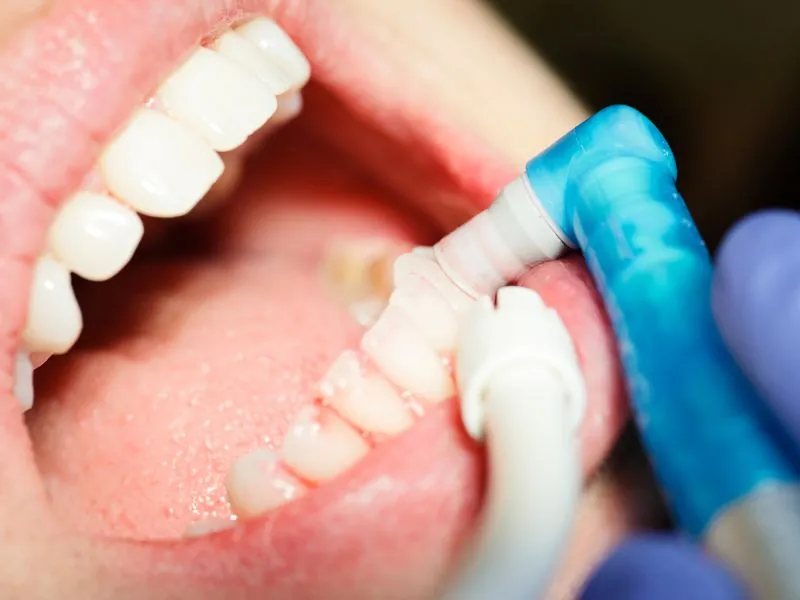
Consequences of not eliminating tartar
Ignoring the need to clean teeth when there is tartar can lead to irreversible problems. Tartar acts as a nest of bacteria, releasing toxins that inflame and destroy tissues.
Sarro subgingival Periodontitis extreme dental sarro
The subgingival sarro is the main cause of Periodontitis When bacteria are chronically present below the gum, the infection destroys the bone that supports the tooth. This causes:
- Chronic inflammation of the gums.
- Gum retraction and root exposure.
- Dental mobility and finally tooth loss.
It's crucial: If you have extreme dental tartar, only a professional periodontal treatment can save your teeth.
 Make an appointment
General oral health information. Your dentist’s assessment is needed to tailor any recommendation to your individual circumstances.
Keep reading the blog