Types of retainers after orthodontic treatment
Types of retainers after orthodontics Which is better?
What are retainers? What are they for?
Post-orthodontic retainers are devices used after completing an orthodontic treatment for keep your teeth in their new position and keep them from misaligning again. Its use is key to ensure that the results of orthodontic treatment are durable.
How long do you have to use retainers?
The time of use of post-orthodontic retainers varies depending on the case, but it is generally recommended to use them constantly during the first 3 to 6 months after the end of treatment. In this initial period, the teeth are still stabilizing in their new position. After this time, we advise to continue using them for nights of life to prevent teeth from moving again, as there is a natural tendency for teeth to return to their original positions.
What's the best retainer?
Below we explain the different types of retainers that exist and their characteristics so that with the help of our orthodontists you choose the best for your case.
Fixed retainers
Fixed retainers are small thin wires that are permanently attached to the back of the teeth, usually lower or upper incisors, to keep them in their new position after orthodontic treatment.. Being permanent, they do not require the patient to place or remove themWhich ensures they're working all the time.
They are very effective and require careful dental hygiene.
Fixed retainers advantages
- Constant effectiveness: Keep your teeth in position continuously.
- Comfort: Being fixed, there is no need to worry about placing them or removing them.
- Aesthetics: They are discreet and placed on the back of the teeth, which makes them less visible.
- Lower risk of misalignment
Fixed retainers disadvantages
- Difficulty in cleaning: They can complicate oral hygiene, as nearby teeth can be harder to clean.
- Plate accumulation: If not maintained properly, they can cause plaque build-up and, potentially, dental problems such as tooth decay or gum disease.
- Possible initial discomfort: Some patients may experience discomfort at first due to wire adaptation.
- Risk of fracture: Although durable, the wire can be broken, which would require a visit to the orthodontist for repair.
Removable retainers
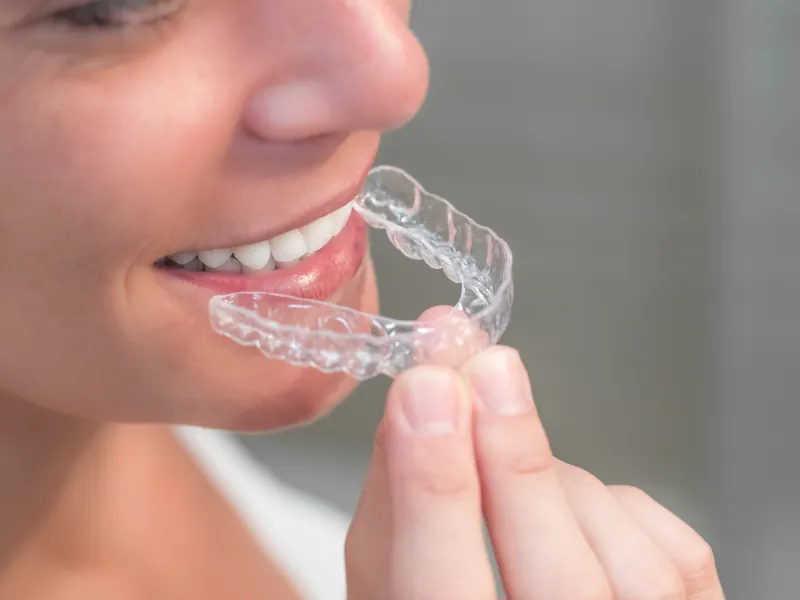
Removable retainers are devices that can be removed and put easily, designed to keep teeth in their new position after an orthodontic treatment. Generally, they are made of plastic or acrylic and can be transparent (such as Essix type) or have a more visible structure (such as Hawley type, which includes a wire).
They are comfortable and allow good dental hygiene, as they can be removed to brush your teeth and eat. Their use is usually constant during the first few months and can then be used only during the night, depending on the recommendations of the orthodontist.
Removable retainers advantages
- Easy dental hygiene: They can be removed to brush your teeth and use floss, which facilitates good oral cleaning.
- Comfort: Many patients find that they are more comfortable because they are not fixed in the mouth.
- Custom adjustment: They are custom made, allowing a suitable and comfortable fit for the patient.
- Aesthetics: Transparent retainers are discreet and less visible, making them more attractive to many.
Removable retainers disadvantages
- Use dependency: Its effectiveness depends on the patient using them constantly; if they are forgotten or not used properly, they may lose their effectiveness.
- Risk of loss: When removable, there is a possibility that they will be lost or broken.
- Initial discomfort: Some patients may experience discomfort or pressure when they start using a new retainer.
- Less continuous control: Unlike fixed retainers, which are always in place, removable retainers may not provide the same level of constant attachment.
The best post orthodontics retainer
The best post-orthodontic retainer will depend on the needs of each patient, as well as their lifestyle, dedication and post-treatment care. In consultation our orthodontic specialists will help you choose the best post-orthodontic retainer for you.
Call your date!
BILBAO GETXOGeneral oral health information. Your dentist’s assessment is needed to tailor any recommendation to your individual circumstances.
Keep reading the blog