Atypical swallowing
Disorders at the time of eating also cause serious problems at the oral level. atypical swallowing and if you have been diagnosed with it, you should know more about it. Therefore, then we will explain everything you need to know about the dysfunctional swallowing.
What is atypical swallowing?
When speaking of atypical swallowing, reference is made to the poor position of the tongue at the time of eating any type of food. In these cases, the tongue presses against the upper and lower incisorsWhich causes the teeth to move forward.
This type of change in chewing can occur at all ages. Therefore, there may be cases of childhood swallowing problems or cases of adult atypical swallowing.
What causes atypical swallowing?
However, it is important to recognize which are causes of atypical swallowing to try to give an origin to this type of condition. Among the most common reasons for this condition are:
- Prolonged use of pacifier or bottle
- Very long digital suction
- Absence of teeth at an early age
- Bitting problems due to abnormal development of maxillary bones
- Presence of a short lingual fret
- An ankyloglosia (Difficulty moving the tongue)
- Problems with the lymphatic system (Amygdalitis, adenoid hypertrophy or tonsil hypertrophy)
- Decreased tone of muscles that are part of chewing (hypotonia)
How do I know if I have atypical swallowing?
Recognizing cases of atypical swallowing is possible because it generates a series of symptoms that are quite specific to consider. Therefore, if you have the following symptomatology you are likely to suffer from atypical swallowing:
- The tongue is placed between the teeth and not on the palate
- The upper and lower dental arcade are not in contact
- You usually use breathing more often
- Your lips don't close at all well
- By eating you can't properly form the food bowl
Treatments Atypical swallowing
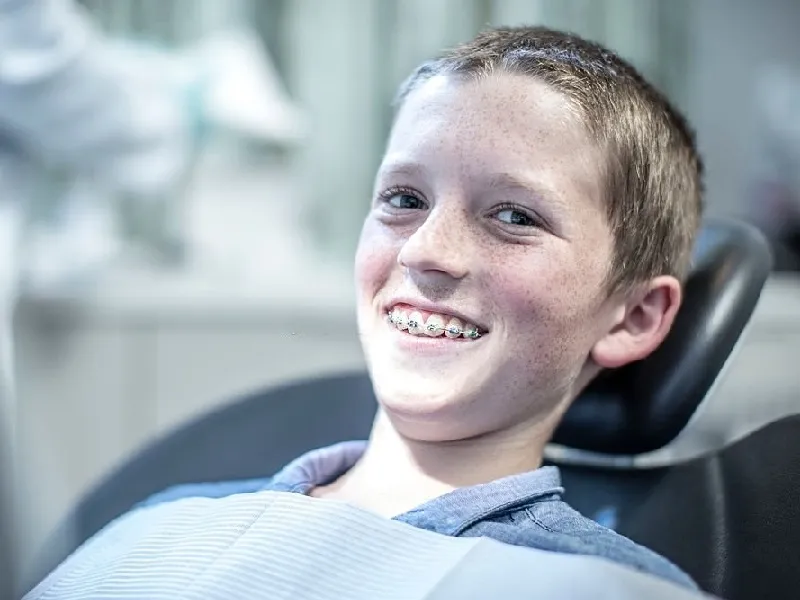
Of course, we also need to talk about atypical swallowing treatment. At this point we must stress that there must be cooperation between the orthodontist and the speech therapist The latter is a professional who is responsible for treating any speech disorder by language therapy.
On the one hand, the orthodontist will be making sure to improve the dental position with the use of devices, and on the other hand the atypical swallowing logopedic treatmentThat's why it's so important that you both work together for a better result.
To learn more about how orthodontic treatment works and logopedia deglucion atypicalThen we'll explain it to you in more detail.
Orthodontics Atypical swallowing
The use of orthodontics is fundamental to correct atypical swallowing. Since, with the use of dental devices, the dental position that has been modified due to this condition can be corrected.
Treatment of atypical orthodontic swallowing is much more effective and faster when the patient is a underage and has been detected on time. However, it will also be functional in adults, even if it takes a little longer.
Myofunctional therapy
On the part of the speech, there is the realization of a myofunctional atypical swallowing therapy. This treatment is based on a series of procedures to improve cases of orofacial muscle imbalance.
That's why they'll start to follow Chewing and swallowing exercises and to improve it. In addition, exercises are also carried out to improve joint At the time of talking.
Stages of treatment of atypical swallowing
Of course, the work in the atypical swallowing apparatus are divided into several stages for treatment with more effective results. These stages are:
Pre-orthodoxy intervention
In many cases, an intervention before orthodontics is usually given by the speech therapist. This is especially the case for children who are not yet old enough to use orthodontics, but who have a logopedic resolution disorder.
Regular monitoring and reviews
After the use of orthodontics, both the orthodontist and the speech therapist must closely monitor your patient’s progressIn this way, it will be possible to check that the changes in swallowing have been given correctly and that there have been no new movements at the dental level.
Treatment after orthodontics
Finally, treatments after orthodontics they are intended for those people who have not managed to completely correct their atypical swallowing or who have not worked together with a speech therapist. This last stage will allow to avoid completely the atypical swallowing consequences.
Exercises for atypical swallowing

The exercises for atypical swallowing are an important part of the treatment to fully restore functionality at the oral level. Of course, they must be assigned by a specialist, because in this way they are able to adapt to each patient.
However, if you want to start with atypical swallowing exercises there are some activities you can do in your day to day that can help you. Some of the most effective are:
- Pull out your tongue and point it at your nose and then at your chin
- Pull out the tongue straight and put it back into the mouth
- Place the closed mouth and put the puna in the interdentary papilla, then swallow saliva without closing the mouth
These exercises should be done with some repetitions of course, all this data can be given to you more successfully by the specialist who will take care of your case atypical swallowing.
General oral health information. Your dentist’s assessment is needed to tailor any recommendation to your individual circumstances.
Keep reading the blog