Mouthwash: types and how to use them
Oral rinse is an excellent and necessary complement for our daily oral hygiene. Thanks to its components, it will help us to treat cavities, gingivitis, periodontitis, bad breath and other pathologies in our oral hygiene.
There are many myths around mouthwashes, as well as types of rinses in the market. If you want to learn how to use mouthwash correctly and the different types that exist, stay until the end of this post.
When to use mouthwash?
The mouthwash is a companion of the brush and floss that is used after brushing our teeth. So it is recommended apply 2 or 3 times a day to get the best results.
The time of use, as well as the way to apply mouthwash will depend on the type of mouthwash you use. Some collutions can be used every day without any problems. While others have a therapeutic purpose to treat some pathology in our dental hygiene, they should be used only for a time established by the dentist or by the product itself.
Types of collutions:
In the market there are different types of mouthwashes. Then we will show you the most common.
Fluorine mouthwashes:
Fluorine mouthwashes are recommended for protect teeth from acids produced by bacterial plaqueThis fluoride works by covering the enamel of the teeth.
Fluorine is a natural mineral that produces our teeth to strengthen the enamel of the teeth and prevent cavities.

For that reason, this type of rinses are recommended for people who have lack of enamel in their teeth, as they are more prone to plaque acids and cavities. It is recommended for adults and children, but each with different doses of fluoride.
Basic or aesthetic mouthwashes:
Aesthetic mouthwashes are the most basic in the market. Their function is basic: to remove the remains of food that the brush or floss could not eliminate, to give freshness to the mouth and to improve the breath.
Antiseptic mouthwashes:
Antiseptic mouthwashes are used in different circumstances. They help reduce and slow the action of gingivitis. They can also be used to treat bad breath or some infected gum. Other times it is recommended to control the bacterial plaque.
These rinses are effective for reduce microbial load, as well as to treat or prevent any infection in the mouth or teeth. It is recommended to be used by those who have received oral surgery or some periodontal treatment. It can even help to cure sores or mouth ulcers more effectively by treating the infection and reducing the pain they cause.
These mouthwashes usually contain chlorhexidine, which helps prevent the growth of bacteria. But it can also leave a bitter taste in the mouth, affect the sense of taste and leave stains on the teeth. Therefore, it should be used under the directions of the dentist and for a certain period.
Non-alcoholic mouthwashes:
Oral rinses usually include alcohol as one of their components. Alcohol has an antiseptic function and helps preserve the components of the formula. Although the amount of alcohol is usually very minimal, it can affect certain types of patients.
In people who have wounds or sensitivities in the gums, walls of the mouth, palate or tongue, alcohol can produce intense burning and sometimes aggravate the lesions. In addition, alcohol greatly reduces the amount of saliva, and even gets rid of it, since alcohol produces dryness. This makes some patients more likely to suffer from diseases in the gums or teeth, such as cavities.
Therefore, alcohol-free mouthwashes are recommended for patients who suffer from dry mouth, oral irritations or burning mouth syndrome. Because they do not have alcohol, they are healthier for patients who have these pathologies.
Oral rinses for children:
Oral rinses are recommended in children from 6 years of age. These mouthwashes are especially designed for children. They usually have less fluoride or chlorhexidine to avoid any damage to the teeth of the little ones.
However, before applying mouthwashes to your child, first you should ask for the dentist's recommendationSo you will know if it is really necessary for the child to use some of these rinses and what is best suited to his needs.
Step by step how to use the collutory correctly:
Below, we show you step by step how to use mouthwash.
Step 1: Use after brushing teeth and using floss
The mouthwash does not have to replace the use of the toothbrush and floss. It is rather a complement to them. Brush your teeth as you normally do to remove the bacterial layer and use the dental floss to remove the residues. Done this, you can already use mouthwash.
Step 2: Pour the rinse into a glass
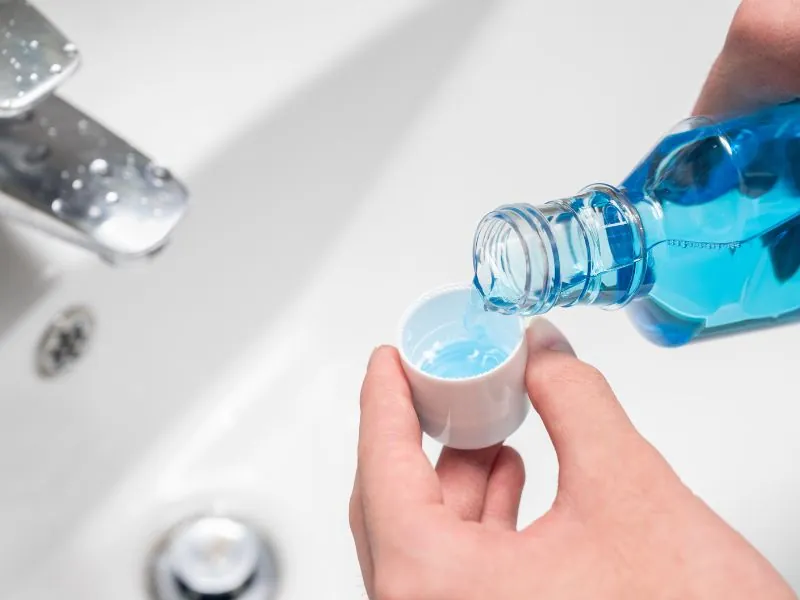
Then, you should pour the rinse into a glass. Some rinses may be diluted in water, though the vast majority must be used directlyThe amount of rinse will depend on each product, usually between 10-20 ml.
Step 4: Empty the glass in your mouth
Done this, you must empty the entire rinse in your mouth to begin the cleaning process.
Step 5: Rinse for 30 seconds
How long should you use the rinse in your mouth? The recommended time is 30 seconds to 1 minute. Pass the mouthwash through each part of your mouth to achieve the desired effect. Gargle so that the solution reaches more parts of your mouth.
Step 6: Spit the solution
After the time, spit the solution. Remember do not rinse your mouth with water, because you would only be damaging the effectiveness of the product. Try not to eat or drink anything for 20 or 30 minutes after using mouthwash for better results.

Precautions to be taken into account when using mouthwash
There are several recommendations you need to keep in mind to properly use mouthwash:
- Use the mouthwash suitable for you. Not all mouthwashes are for all types of people. Using an inadequate mouthwash can make you not see any major improvement, such as if you try to treat caries or gingivitis with an aesthetic rinse. In the worst case, it could be harmful to your oral health. If you suffer from sensitivity or some pathology, mouthwashes with alcohol could dehydrate your mouth, increase the appearance of ulcers, delay healing, irritate the mucosa and increase pain.
- Watch out for mouthwashes with chlorhexidine. This is a fairly effective component for treating bacteria in the mouth. But it is not usually prescribed for treatments that exceed two weeks. This component in high doses for long periods of time brings side effects to our oral health.
- Do not rinse the children mouth without the recommendation of a dentist. Before you start giving your child a mouthwash, take it first to a dentist. This way, you will not only be able to know if your child really needs to use this product, but you will also be able to prescribe one that meets the particular oral needs of the child.
Do you need to know more about how to use the collutory?
If you want the advice of a professional to choose and properly use a mouthwash, you can contact the ODONTOFAMILY Clinic. We have highly trained dentists to advise you according to your needs.
General oral health information. Your dentist’s assessment is needed to tailor any recommendation to your individual circumstances.
Keep reading the blog