Aligners and work: fitting clear orthodontics into your routine
Meetings, coffee, eating out and travel: aligners fit more easily into a prepared routine. Learn what to discuss at your assessment, how to organise care and when to ask about a problem during your working day.
Wearing aligners while you work often raises very practical questions: where to put them at lunchtime, how to speak during an important meeting, or what to do when a business trip changes your schedule. Working through those details before you begin helps treatment become part of your day, with less need to improvise. The discreet appearance of the appliance may appeal to you, but your choice must also take account of your bite, the health of your mouth and your ability to follow the instructions you receive.
This guide focuses on organising your working routine during clear aligner treatment. Every treatment plan has its own instructions about wear, changes and appointments. It is useful to leave the practice with those instructions in writing and a clear way to contact the team if something happens. At Odontofamily you can arrange an assessment in Bilbao, Errekalde, or Las Arenas, Getxo, and explain what your working day actually involves from the outset, including shifts, meetings and travel.
An assessment of your mouth comes before the timetable
Aligners apply planned forces to move teeth. Deciding whether to use them requires an examination of your teeth, gums and bite, together with a review of existing restorations and your health history. A photograph of your smile or a digital simulation may help you discuss your goals, but neither provides all the information needed. If you have tooth decay, inflamed gums or other active problems, the team may recommend an initial period of care before tooth movement begins.
Explaining your priorities makes a shared decision easier. You may be concerned about public speaking, work long hours without a suitable place to brush, or regularly attend business lunches. These circumstances can be planned for, although they may also influence the choice of appliance. Asking about alternatives such as treatment with braces allows you to compare the practical requirements, advantages and limitations of each option, without assuming that the most discreet solution is always the most suitable one for you.
Map out a working day that reflects your own
Before starting, spend a couple of days noting when you have breakfast, drink coffee, eat lunch and have dinner. Include short breaks and snacks, because these often explain why maintaining a consistent routine is difficult. The purpose of this record is to identify times when you can calmly remove, store and put your appliance back in. Describing a normal working day is more useful than promising a perfect schedule that will be difficult to maintain for several months.
Then review that outline with the team responsible for your treatment. Ask how to fit the necessary removals into your prescribed schedule and what to do on unusual working days. If you work shifts, explain weekly changes and periods of night work too. Linking care to things you already do, such as preparing lunch or shutting down your computer, is often simpler than relying on numerous different alarms that you may eventually ignore when work becomes more demanding.
Understand your wear instructions before leaving the practice
Your wearing time and the point at which you change each aligner must follow the prescription for your case. You should not copy someone else's timetable, even if they also wear a transparent appliance. The fit observed, the movements planned and the response of your tissues may make checks or adjustments to the plan necessary. A day involving many removals cannot be made up for by moving to the next aligner early or trying to speed up treatment yourself.
If you cannot follow the instructions on a particular day, record what happened and ask how to proceed. A specific explanation helps: how long the appliance was out, whether it fitted again afterwards and whether you experienced discomfort. Hiding difficulties makes adapting the plan to your life more complicated. It is also sensible to confirm what instructions apply if you are ill, cannot attend a review or need dental treatment during orthodontics, because those situations call for an individual response.
Meetings, calls and public speaking
While you adapt, you may notice changes in pronunciation or become more aware of the appliance in your mouth. Experiences differ between people and according to aligner design. Practising a short passage aloud may help you recognise which sounds feel difficult and become more comfortable, without turning practice into an obligation that creates additional concern. If you have an important presentation, mention it beforehand so you can organise the appointment and discuss the questions that are actually worrying you.
Repeatedly removing aligners for every call may make following your plan difficult. First establish whether the difficulty is part of adaptation or whether there is a rubbing edge, incorrect positioning or another problem that can be reviewed. A persistent change in speech or an injury needs professional advice. You do not have to explain your treatment to every colleague either: choose the level of privacy that feels comfortable and prepare a short answer so the subject does not occupy your thoughts throughout the working day.
Business lunches and coffee breaks
Organising meals is often the most practical aspect of treatment. Follow the instructions about removing your appliance for food and about which drinks are compatible with wearing it. Heat, pigments and sugar can create different problems, so it is worth asking specifically about coffee, tea, herbal infusions or the drinks you usually have. Keeping a bottle of water nearby may make a simple routine easier during the hours between meals.
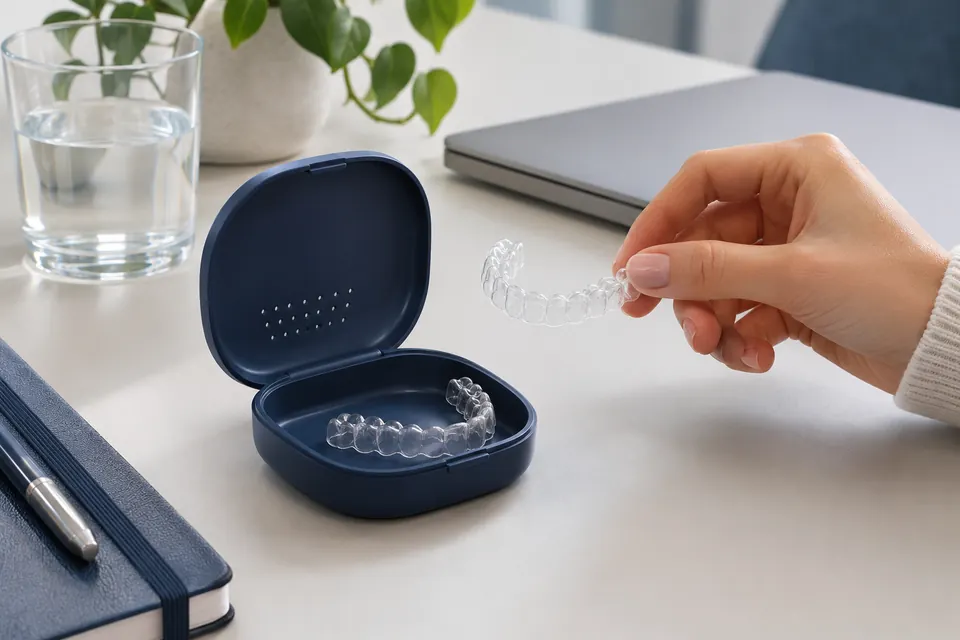
At a restaurant, put your aligners in their case before you begin eating. A napkin or jacket pocket increases the chance of losing, crushing or accidentally throwing them away. Afterwards, allow the time needed for cleaning according to your instructions. If your job involves constant snacking or tasting food, explain that at your appointment: this part of your work needs a realistic strategy and may be relevant when assessing which treatment best fits your responsibilities.
A small kit to make cleaning easier
A sturdy case, a toothbrush and the products recommended by your dentist are usually more useful than carrying numerous accessories you never use. Keep your supplies clean and check their condition periodically. Cleaning the appliance must follow both its manufacturer's instructions and the clinical team's advice; abrasive products or very hot water can damage it. If you need a solution for the office, ask what is appropriate before buying cleaners based on advertising or other people's recommendations.
Oral hygiene includes your teeth and the spaces between them, which an ordinary toothbrush may struggle to reach. Attachments and restorations also need attention. A professional dental cleaning may form part of follow-up care when indicated, but does not replace daily care. If bleeding, a persistent unpleasant smell or difficulty cleaning an area develops, it is worth reviewing your technique and the health of your gums, rather than covering the problem with a mouthwash chosen at random.
Travel, shift changes and days away from home
Before travelling, check which aligners you need to take and which you should keep for reference according to your instructions. Store important supplies somewhere accessible, together with the practice's contact details. If you will be away for several weeks, communicate the dates in advance so necessary reviews can be organised. A trip does not in itself mean treatment must stop, but may require different coordination if it falls during a stage that needs an in-person check.
Schedule changes also affect reminders. It is better to identify your eating, resting and cleaning times within the new working day than to follow alarms that no longer match what you are doing. If you work somewhere without convenient access to a washbasin, ask how to organise things safely. Avoid leaving the case in a hot car or next to equipment that gives off heat. Preparing these details when packing reduces many preventable problems.
What to do if something breaks or stops fitting
An aligner with a crack, loss of fit or an edge that causes a sore needs specific advice. Do not alter it using heat, scissors or glue, and do not force it into place if it does not seat as you were shown. Contact the team and describe what happened; a photograph may help explain the situation, although it does not always replace an examination. The professional will tell you whether to continue, change or temporarily suspend part of your prescribed wear.
Mild pressure when starting a new aligner may be part of the experience, but severe pain, significant inflammation, a worsening injury or an inability to insert the appliance needs advice. If you have difficulty breathing or swallowing, rapidly increasing swelling or a serious injury, seek urgent care. Understanding this boundary avoids two unhelpful extremes: becoming alarmed by every new sensation or waiting too long because everything is attributed to normal adaptation.
Reviews and dental care during orthodontic treatment
Including appointments in your work diary makes attending planned checks easier. Ask how much time to allow for each visit and whether you should bring any documents. Reviews allow the team to assess your treatment response, examine the fit and identify hygiene or oral health problems. If an appointment needs changing, give advance notice so the team can explain how to continue; accumulating aligners without supervision does not replace these checks.
You should also keep up with general dental examinations appropriate to your risk. Orthodontics does not protect against tooth decay, periodontal disease or problems with old restorations. Report any changes in your health or medication and ask how to coordinate other treatments if they become necessary. Knowing the Odontofamily team and who to approach with each question makes follow-up easier, especially when work makes it difficult to remember dates or distinguish between a practical question and a symptom that needs assessment.
Prepare your first month with straightforward decisions
The best system is one you can repeat in an ordinary week and in a more demanding one. Choose a fixed place for your case, leave a hygiene kit where you actually need it and check your timetable before agreeing to a long trip. Record recurring problems so you can discuss them together at your appointment. That information helps you adjust specific habits, instead of attributing every difficulty to a lack of commitment or making treatment a constant source of concern.
If you are still considering your options, bring your questions to a first appointment. Ask which goals are reasonable, how progress is checked and what maintenance will be needed afterwards. Retention forms part of the long-term plan and should be explained before treatment is considered complete. An informed decision includes everyday experience, alternatives and follow-up care, as well as the appearance of the appliance. You can then choose with a fuller understanding of what treatment means for your work and oral health.
| Situation | What to prepare | What to avoid |
|---|---|---|
| Eating out | Your case and cleaning supplies, following your instructions | Wrapping aligners in a napkin |
| Business travel | The supplies specified and the practice's contact details | Moving to a new stage without asking about a problem |
| An important meeting | Practice and answers to questions about fit | Habitually removing the appliance for every conversation |
If you share bathroom facilities or work with the public, also consider a comfortable place to remove and store the appliance without rushing. You can prepare a discreet toiletry bag and check that the case closes properly before returning to work. If a difficulty with hand movements means you need help handling the aligner, explain that during the demonstration at the practice: it is useful to practise the technique and adapt support before facing an everyday difficulty alone. Organisation should also take account of your accessibility circumstances, available breaks and any support needs. There is no single correct way to fit treatment into a working day; there are clinical instructions that need to become a system you can maintain.
Frequently asked questions about aligners and work
Can I wear aligners if I speak for many hours?
Speaking a lot does not automatically rule out treatment. Explain the type of work you do, whether you use a microphone and whether you have important commitments at the beginning. The team can check the fit and help distinguish initial adaptation from discomfort requiring correction. Your ability to follow the wear instructions is one part of the assessment, alongside the dental diagnosis. You do not need to decide solely out of concern that other people might notice the appliance.
Do I have to change my mealtimes?
Grouping breaks in a way that fits your prescribed schedule may be useful, but you should not alter nutritional needs or medical instructions to wear aligners. If you need to eat frequently for health reasons or because of your job, discuss this before starting. The plan needs to account for that reality. Organisation is adapted with you and requires specific instructions; a general internet rule cannot establish how much flexibility your case needs or which alternative might be more suitable.
What if I cannot brush immediately during a meeting?
Ask the team which procedure to follow in that situation and carry the supplies they recommend. The answer depends on your risk of tooth decay, the appliance's requirements and the actual cleaning options available. Do not turn an occasional difficulty into a routine without reviewing it. When a situation recurs every day, it deserves a planned solution. Also confirm how to clean the aligner when away from home and which products to avoid so it is not damaged.
Can I change an aligner early to fit around a trip?
Aligner changes must follow the prescribed schedule. Moving changes forwards or backwards without guidance may alter planning and make assessing the fit harder. If you know you will be travelling, give enough notice to organise supplies and checks. If the trip arises unexpectedly, get in touch before deciding how to proceed. A convenient timetable matters, but needs to fit treatment requirements and the response being observed in your teeth.
Do aligners replace a bite splint?
These devices have different purposes. If you clench your teeth, have jaw pain or already use a splint, explain this during your assessment. The professional will consider how to coordinate that situation with orthodontic treatment. Do not wear overlapping appliances or alternate between devices yourself if they were not designed to work together. Having plastic over your teeth does not mean that every cause of pain is being addressed or that protection is equivalent in all circumstances.
How long will getting used to them take?
Adaptation is individual and may change according to the treatment stage. It is more useful to observe whether sensations improve and the appliance fits correctly than to compare yourself with someone else's exact timeframe. Report severe pain, persistent sores or significant difficulties speaking or inserting the tray. Resolving these problems promptly helps maintain your routine. The team can investigate what is happening without assuming that everything must be endured as an inevitable part of the process.
Can I forget about appliances afterwards?
After tooth movement finishes, a retention stage is usually necessary, with its own instructions for wear, care and reviews. The type of retainer depends on the case and may be fixed, removable or a combination. Discussing this stage from the beginning helps you include it in your habits. If a retainer breaks, is lost or stops fitting, seek advice. Maintaining the position achieved requires follow-up, and that part also deserves a place in your everyday organisation.
Sources and recommended reading
General oral health information. Your dentist’s assessment is needed to tailor any recommendation to your individual circumstances.
Keep reading the blog