Veneers and bruxism: what to consider before changing your smile
If you clench your teeth and want to improve your smile, function deserves attention before choosing veneers. Discover what to ask about materials, tooth preservation, alternatives, splints and maintenance so you can make a decision with realistic expectations.
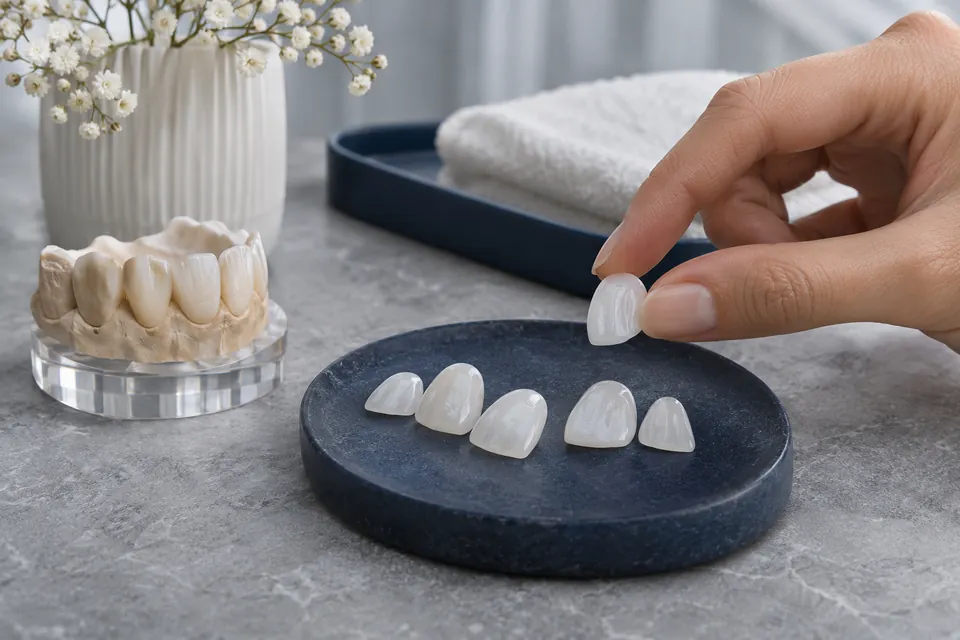
If you clench or grind your teeth and are thinking about improving your smile with veneers, the important question is how appearance, function and the care of your teeth will work together. Bruxism can be relevant to planning because restorations receive forces inside a mouth that chews, speaks and changes over time. This does not automatically rule veneers in or out: first, the dentist needs to investigate what is happening and which goals are reasonable for your particular situation.
This guide focuses on the decisions before having dental veneers when bruxism is suspected or has occurred before. You can discuss your situation at Odontofamily in Bilbao, Errekalde, or Las Arenas, Getxo. Bringing information about discomfort, previous breakages or a splint you already use helps the team assess the whole picture. The choice of material and the shape of your smile should follow an understanding of your oral health and how your bite functions.
Define what you want to change and what you need to preserve
Before choosing treatment, it helps to specify what concerns you: a broken edge, a colour you dislike, small teeth, gaps or progressive wear. These are different situations and may have different alternatives. A reference photograph can help express your preferences, but it needs to be adapted to your teeth, gums and expression. The purpose of a reasonable smile design is to study these relationships and explain the limitations, without promising an exact copy of somebody else's smile.
The amount of tooth tissue preserved and any existing restorations also matter. A cosmetic proposal may involve preparing tooth surfaces, bonding materials or replacing previous restorations. Ask which changes would be needed in your case and which are reversible or irreversible. Preservation plays a central part in the decision. Repairing a small edge is different from covering several teeth, and the choice should be justified by the needs identified during the assessment, as well as the visual result you want when you smile.
Understand bruxism without diagnosing it from a photograph
Bruxism includes clenching or grinding the teeth and can occur while awake or during sleep. A person may be unaware of doing it. Signs that prompt an assessment include wear, fractures, sensitivity and muscle discomfort, but these findings are not exclusive to one cause. For example, wear can have several components and reflect what happened in the past. This is why an assessment of TMJ problems and bruxism should bring together your history, symptoms and an examination before attributing everything to clenching.
Explain whether your jaw feels tired, whether somebody hears you grinding at night or whether you have broken fillings or crowns. It is also useful to mention changes in your sleep, health or medication. Assessment may require collaboration with other professionals if associated problems are suspected. You should not stop medicines yourself or use a shop-bought splint as a diagnostic test. The aim is to understand which factors matter for protecting your mouth and planning any restoration with clearer expectations about the treatment.
Your bite affects shape and contact points
A veneer does not work in isolation: it contacts opposing teeth and takes part in jaw movements. The location of those contacts, the available space and the relationships between teeth can influence its design. Some situations require consideration of tooth alignment or a different restorative approach first. The assessment includes everyday function, as well as the view from the front with the mouth slightly open. A visually attractive result must also be capable of being reviewed and maintained within your own pattern of chewing.
Ask how your bite has been taken into account and what limits it places on the shape you want. Adding length or volume is not always possible in the same way for everyone. If clear aligner treatment or braces are proposed as an earlier stage, you should understand which problem they are intended to address and how they fit with the cosmetic treatment. A clearly explained sequence lets you compare the most direct intervention with other options that may change the starting conditions before restoration.
Gums and tooth decay are checked before cosmetic treatment
Veneers do not remove the risk of decay or replace treatment for periodontal inflammation. If there are bleeding gums, deposits or active lesions, these needs should be assessed and treated as appropriate. Periodontal care helps evaluate the tissues that frame your smile, while conservative dentistry examines the integrity of the tooth. Placing a restoration when an underlying situation is not controlled can make maintenance more difficult and leave the cause of the symptoms unresolved.
Mention whether an area is difficult to clean or whether you already have sensitivity. This information influences planning and the instructions you receive afterwards. Previous restorations, root canal treatments and possible cracks also need checking. These findings do not all prevent a cosmetic improvement, but they may change the suitable option and the order of treatment stages. A good explanation distinguishes care needed for health from changes you choose for cosmetic reasons, so that you can make an informed decision about each part of the plan.
Material and design are chosen together
Veneers can be made from different materials, such as ceramic or composite, with different requirements for manufacture, repair and maintenance. None of them makes a restoration unbreakable. The amount of available tissue, your bite, colour and shape goals and the ease of repair can all influence the choice. Comparing only the material's name or its appearance in a photograph leaves out much of the clinical decision, particularly when there is a history of clenching or repeated breakages in the mouth.
Ask why a material is being proposed for your case and what would happen if a veneer chipped, came loose or changed over time. Some repairs may be possible, while other situations may require replacement of the restoration. The estimate should relate to the scope of the plan, rather than an idea of unlimited lifespan. Knowing what maintenance is expected and what modifications your teeth would need helps you compare options more usefully than choosing on the basis of a promise of absolute strength.
Consider the alternatives before covering a tooth
If you are seeking advice about a small edge or a difference in colour, it may be reasonable to explore less extensive options before deciding on several veneers. A localised build-up, suitable tooth whitening treatment or a change in tooth position may have a role, depending on the diagnosis. Alternatives do not all achieve the same goals or have the same limitations. The comparison should explain what each option changes, what it preserves and what it needs for maintenance over time.
You can also decide against an immediate cosmetic change and focus first on the health and protection of your teeth. This possibility deserves an open discussion when the procedure is elective. If there is active wear or a fracture affecting function, the professional will explain which needs should be addressed and their priority. Separating urgent, necessary and optional care supports a proportionate decision, without turning dissatisfaction with a photograph into a reason to rush into treatment before understanding the options available to you.
If you already use a splint, bring it to the appointment
An existing splint provides information about previous treatment and your experience of using it. Explain whether it fits, whether you wear it regularly and whether it causes discomfort. When the shape of the teeth changes, its fit may need reviewing or a new device may be considered when appropriate. Do not force a splint that no longer fits after restorations have been placed, or modify it using heat or tools. The team needs to check how it works with the new situation in your mouth.
An appropriate splint may help protect structures, but it does not guarantee that all clenching activity will disappear or remove every risk of fracture. Its usefulness is assessed alongside other care and follow-up. Instructions should specify when to wear it, how to clean it and when to have it checked. If keeping up this habit is difficult, say so before deciding on cosmetic treatment. Planning can take your real difficulties into account, instead of assuming protection that you later cannot use consistently in everyday life.
Try-ins, expectations and informed consent
Records, photographs and shape try-ins can make it easier to discuss the proposed smile. Their purpose is to help you understand changes and limitations; they do not guarantee an identical final result. During a try-in, discuss appearance, comfort, speech and how it feels when you close your mouth. If something worries you, ask before moving on to an irreversible stage. The decision should be based on a clinical explanation and your preferences, with enough time available for you to have your questions answered.
Ask for documentation of the teeth involved, the planned preparation, the alternatives and possible maintenance issues. For someone with previous breakages, it is useful to know how the restoration will be monitored and what would happen if a problem arose. An exact lifespan cannot be assured for each veneer. Useful information describes possibilities, care and risks in an understandable way, without turning a general estimate into a personal promise that cannot be demonstrated before the treatment has even begun.
Everyday care to plan in advance
Daily cleaning should reach the margins and the spaces between teeth using appropriate aids. Ask which products and technique suit your restorations and the condition of your gums. Reviews allow the team to check fit, wear and tissue health. If you notice an uneven edge, a new sensation when biting or a change in your splint, seek advice. Small problems may need assessment before you continue putting force on an area that is not working as originally intended within your mouth.
Avoid using your teeth to open packaging, hold objects or habitually bite hard items. If you take part in an activity with a risk of impact, ask about suitable protection. These measures are part of general care and do not replace assessment of bruxism. It is also unhelpful to test a veneer's strength by biting hard to see whether it will withstand the force. Use the restoration within the instructions you receive, and discuss any questions about particular foods or habits during follow-up appointments.
Make your decision with the whole picture in mind
Before requesting your assessment, make a list of what you would like to change and the functional problems you have experienced. Bring your splint, reports and earlier photographs if available. The Odontofamily team can help you organise priorities and explain which treatment should be explored first. A personalised proposal should connect the diagnosis with the goals and care involved, allowing you to consider both the appearance of your smile and what maintaining it will involve over time.
If a recommendation is difficult to understand, ask for a comparison with an alternative or for the team to show you which structure they want to protect. You can also request an explanation of what would happen if an elective part of the plan were postponed. Bruxism does not turn the decision into a yes-or-no answer based on a single word. It calls for a review of the conditions, discussion of uncertainty and agreement on a sequence that responds to your mouth, symptoms and preferences.
| Aspect | What to ask |
|---|---|
| Tooth tissue | Which modifications would be necessary and which conservative alternatives are available |
| Bite and protection | How contact points and a possible splint will be checked |
| Maintenance | Which signs to watch for and which options would be available after a breakage |
Frequently asked questions about veneers and bruxism
Does bruxism prevent veneers in every case?
There is no universal answer. The assessment should investigate the suspected activity, symptoms, previous breakages, bite and available tooth tissue. In some cases, restorations with care measures may be considered; in others, an alternative or an earlier treatment stage is advisable. The decision does not depend solely on choosing a strong material. Ask which factors in your mouth influence the proposal and which limitations would remain even if you followed the instructions for protection and maintenance given by the dental team.
Can a ceramic veneer ever break?
It can chip, fracture or come loose, like other restorations, depending on the forces and conditions in the mouth. Choosing ceramic does not remove these risks or allow an exact lifespan to be guaranteed. Design, bonding, available tissue and function also play a part. Ask which problems are possible and how they would be addressed. A realistic explanation lets you assess treatment according to its suitability and maintenance, instead of deciding on the basis of a promise that a material is indestructible.
Does wearing a splint mean every risk is controlled?
A splint can provide protection when appropriate, but it does not resolve every factor or guarantee that clenching will disappear. It must fit and be reviewed, especially if the shape of the teeth changes. Hygiene, habits and monitoring symptoms also matter. If the device bothers you or you do not use it, explain this to the team. The plan should be based on care you can carry out, without assuming that simply having a splint automatically amounts to complete protection for the restorations.
Can I use my old splint after veneers?
It needs a professional check. Restorations can change the shape it previously fitted, and forcing it into place could be inappropriate. Bring it to the consultation before treatment so that protection can be planned alongside the restorations. The team will explain whether it can be adapted, whether it needs replacing and what to do during intermediate stages. Do not heat or trim it at home to try to make it fit. New pressure or an incomplete fit are reasons to request a review.
Does tooth wear confirm that I am currently clenching?
Wear can reflect different processes and an accumulated history, so it does not demonstrate current bruxism activity on its own. It is assessed alongside symptoms, your history, examination findings and other information when needed. Acids, habits or other conditions can also play a part. Explain which changes you have noticed and whether fractures recur. Assessment helps guide care and decide whether protection, repair or investigation of other factors is advisable before carrying out extensive cosmetic changes to the teeth.
Can I improve my smile without veneers?
Depending on the reason for seeking advice, alternatives such as orthodontics, appropriate whitening, small build-ups or simply caring for and monitoring the situation may be explored. Each option has different goals and limitations. Improving colour does not necessarily correct a tooth's position, and a localised build-up does not always address extensive wear. Ask for a comparison that includes the tissue being modified and maintenance. You can also prioritise health and function before deciding on a cosmetic intervention that is not immediately necessary.
What should I do if a veneer chips or my bite changes?
Contact the clinic to have the restoration checked and avoid trying to glue or polish it at home. If you have kept a fragment, ask how to bring it to the appointment. Explain whether you have pain, sensitivity or a different feeling of contact, as this can help determine priority. The professional will assess whether repair is possible or another approach is needed. Continuing to bite to see what happens can make the problem worse, so obtain instructions until your review.
Sources and recommended reading
General oral health information. Your dentist’s assessment is needed to tailor any recommendation to your individual circumstances.
Keep reading the blog