A tooth darkens after an injury: why follow-up matters
A colour change after dental trauma does not by itself confirm what is happening inside a tooth. Learn what information to bring, why follow-up may be needed and how health and cosmetic decisions are coordinated.
A tooth can change colour after a knock even if it has not broken and the pain has disappeared. Sometimes the change becomes noticeable quickly; in other cases, someone recalls an old accident after noticing that a tooth looks different in a photograph. That darkening deserves a dental review, because the change you can see in the colour is only one part of everything that may be happening to the tooth. On its own, it does not confirm that the tooth has lost vitality or establish which treatment it needs without examining the area.
After a traumatic dental injury, it is important to assess both the affected tooth itself and the tissues nearby, even when the injury initially appears to be only a small one. At Odontofamily you can seek advice in Bilbao, Errekalde, or Las Arenas, Getxo, explaining when the impact occurred and the changes you have observed. This guide focuses on following up a colour change: what information it provides, which tests may be necessary and why a decision about root canal treatment or appearance requires more information than the look of your smile.
Colour is a sign, rather than a complete diagnosis
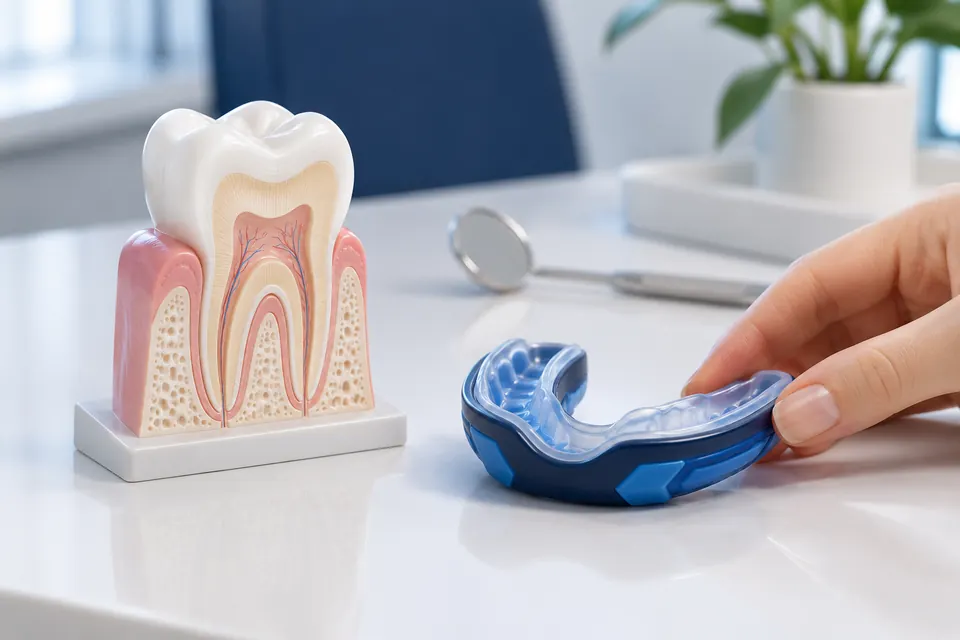
Trauma can affect different structures within a tooth and the tissues supporting it. Enamel may appear intact while internal changes have occurred that need monitoring. The pulp, located inside the tooth, contains blood vessels and nerves. Its response to injury may develop over time, and external appearance cannot reveal every process involved. For that reason, it is best to avoid reaching a definitive conclusion solely because you can see that the tooth has become grey, yellow or generally darker than it used to be.
There are also causes of colour change unrelated to an impact, such as certain restorations, deposits or other dental problems. A history of trauma provides a relevant clue but does not exclude other explanations. During the consultation, the team investigates whether the change affects just a single tooth or several teeth together, and compares the current appearance with whatever earlier records are available for review. The purpose is to identify what needs attention and what can be observed, rather than choosing cosmetic treatment before establishing the tooth's condition.
Reconstruct what happened, even if time has passed
Try to remember the approximate date, how the impact happened and whether the tooth changed position, became loose or bled at the time. Explain whether you received care, had a restoration placed and attended subsequent checks. Bring any reports, X-rays or photographs you have kept. There is no requirement to remember every single detail of the accident before requesting an appointment: even an approximate explanation of what happened provides useful information for the assessment. It also matters whether repeated impacts have occurred during sport or another regular activity.
Describe developments since then: pain when biting, sensitivity, a small bump on the gum, episodes of swelling or a progressive colour difference. Some of these symptoms may occur only intermittently and then disappear again before the day of your appointment, which is why making a written note of them is useful. If the impact is recent, do not wait for the shade to change before seeking advice. Early examination allows injuries that may not be visible to the naked eye to be assessed and establishes a starting point for following that tooth.
Examination looks beyond the darkened tooth
The dentist may assess mobility, response to contact, your bite, the gum and neighbouring teeth. An impact does not always affect just one tooth, and some injuries may initially go unnoticed. Examination also checks for a fracture or restoration affecting function. The particular tests used during this process are selected according to the history you describe and the findings that emerge when your mouth is examined. A structured examination helps distinguish a problem inside the tooth from an injury to supporting tissues or another cause of pain.
Pulp sensibility tests provide information, but interpreting them requires context. Following certain injuries, the response may change and require further checks, so a single result does not always resolve the diagnosis. Ask what is being assessed and what information is missing before a decision can be made. If the dentist proposes that you return for another appointment, ask for an explanation of the particular purpose of that next review. Follow-up does not simply check whether colour improves: it also observes developments in symptoms, tissues and relevant clinical records.
When images and comparable records are used
X-rays can help investigate roots, nearby tissues and other features not visible during direct examination. Whether imaging is needed and which type is appropriate depend on the suspected injury and previous information. The same set of investigations is not required for every person with a tooth that has changed colour after a traumatic injury. Provide recent records if you have them so the professional can assess their suitability. Repeating images without a specific clinical question does not necessarily provide greater safety or a better explanation of the colour change.
Clinical photographs can document appearance for comparison over time. Lighting, angle and camera affect how a shade is perceived, so minor differences between home photographs should not be interpreted as definite progression. At the practice, these records are considered together with what the professional finds during examination, rather than being interpreted as a separate diagnosis on their own. Dental technology can help with documentation, but an attractive visual image or simulation does not replace assessing the health of the tooth and its surrounding structures.
A child's tooth needs a specific assessment
For a baby tooth, the decision must account for the development of its permanent successor and the type of injury. A change in the colour of a baby tooth does not mean that the family should try to remove that tooth or abandon its usual care and cleaning. A paediatric dental review assesses symptoms, tissues and the need for follow-up or treatment. Mention an old impact too, even if it seemed resolved. That information may matter when assessing the baby tooth's progress and the dentition developing beneath it.
In an immature permanent tooth, the degree of root development may influence options for preserving tissues and treating the injury. Not every traumatic injury receives the same root canal treatment, and the child's age alone does not determine the decision. Attending recommended checks and reporting changes is particularly important. If an impact knocks out a baby tooth, do not replant it at home. A knocked-out or displaced permanent tooth requires urgent care and specific immediate instructions.
What may lead to treatment inside the tooth
When the history, examination and tests indicate a pulp problem needing treatment, the professional will explain appropriate options for the case. The objective may be to preserve the tooth and control an infection or injury to internal tissue. The decision also depends on whether the tooth can be restored and its stage of development. Root canal treatment is not indicated simply to match the colour of a smile, but for a clinical need that should be explained before proceeding.
Where the tooth has already received root canal treatment in the past, the assessment needs to approach the situation differently and review that previous treatment. The seal, restoration, symptoms and available records are reviewed to assess whether anything further is needed. Do not assume every darkening reflects defective root canal treatment or that another procedure will resolve every cosmetic change. Ask the professional to explain precisely which problem the proposed treatment is intended to address, together with how its subsequent progress will be checked. Understanding that objective helps separate health decisions from options that might later be considered for appearance.
Appearance is considered once the situation is understood
If the tooth's condition allows consideration of a colour improvement, alternatives depend on the cause of darkening, restorations and the amount of tissue remaining. A different approach from tooth whitening used for several teeth may be necessary. Fillings, crowns and other materials also do not respond in the same way as natural tissue. Before choosing between these options, you need an explanation of their expected benefits, their limitations and the care each requires, without a promise that the resulting shade will always be identical to the neighbouring teeth.
Dental veneers and restorations are among alternatives that can be considered when indicated, but should not become an automatic response to previous trauma. Prioritise conservation and ask what changes each option would require. If treatment is proposed, ask the team to distinguish which part protects or repairs the tooth and which part seeks a cosmetic change. That distinction supports a proportionate decision and clearer understanding of subsequent maintenance.
Caring for the area while assessment is completed
Maintain gentle cleaning and avoid manipulating the tooth to keep checking whether it moves or its response changes. If trauma is recent, follow the specific instructions received about eating, cleaning and activity. Do not bite hard objects to test the tooth or apply home remedies to lighten it. If you begin to notice sensitivity in the tooth, ask the team which particular care measures are appropriate for the injury being assessed. The plan may vary with the type of injury, so instructions given to someone with a different injury should not simply be copied.
If you play a sport involving impact risk, mention it so protective measures can be considered when appropriate. A mouthguard should be selected and fitted according to the activity and your mouth's condition. If you wear braces, the appliance also needs consideration. Preventing another injury matters during follow-up, but no device can promise absolute protection. What matters is receiving practical guidance you can follow and knowing what to do if another injury occurs.
Symptoms requiring a priority appointment
Contact the team if increasing pain, swelling, discharge, a gum bump, new mobility or difficulty biting develops. A visible fracture or a tooth changing position after impact also needs prompt assessment. If colour change accompanies symptoms, explain both when requesting care. Lack of pain does not remove the need for examination, but these signs may change its priority. Do not take leftover antibiotics or try to puncture or drain an inflamed area yourself.
Rapidly spreading swelling, difficulty breathing or swallowing, significant bleeding that does not stop or a facial injury involving loss of consciousness requires urgent care. In Spain, you can call 112 for a medical emergency. If trauma includes a completely knocked-out permanent tooth, seek immediate dental guidance: time and how the tooth is stored matter. Do not wait for an ordinary appointment to address an acute injury because the tooth does not look particularly dark at that moment.
Organise follow-up with specific questions
Before leaving, ask what has been found, what will be monitored and when to return. If observation is chosen, request the signs that justify bringing the review forward. Note dates and keep records so the injury history is not lost. Developments may require checks even without pain. A clear timetable reduces uncertainty and prevents follow-up being interrupted simply because colour looks stable for a few weeks or a child stops mentioning the tooth.
To prepare for an appointment, gather reports and describe the circumstances of the impact, however old. The team can assess whether you need monitoring, restoration or specific treatment. Restorative dentistry aims to preserve tissue and function whenever reasonable, within the possibilities of each injury. The best decision combines diagnosis with your priorities and explains expectations for every stage without reducing a dental health problem to choosing a shade of white.
| Detail | Why it is useful |
|---|---|
| Date and type of impact | Helps reconstruct the injury and its development |
| Pain, mobility or swelling | Guides the priority of examination |
| Previous reports and photographs | Allows records to be compared without relying solely on current colour |
Frequently asked questions about a dark tooth after impact
Does a grey tooth mean the nerve is dead?
Colour alone cannot confirm that. Assessment requires the trauma history, examination, tests and, where appropriate, imaging and follow-up. Some responses may change over time, especially after a recent injury. The professional should therefore explain what is known and what needs monitoring. Neither root canal treatment nor whitening should be decided solely from a photograph. Mention pain, swelling or discharge if present so the priority of care can be assessed.
Should I seek advice if the impact happened years ago?
Yes, an old injury remains useful information when a new change appears. Try to remember which tooth received the impact and whether there was treatment or follow-up. Even without reports, request examination and explain what you know. The professional will assess the current situation and decide which records are needed. Not every late change is definitely caused by the impact, but the history should not be dismissed merely because considerable time has passed since the accident.
Can the colour recover without treatment?
Progress depends on the cause of the change and the tooth's condition. Some situations are observed before intervention is chosen, while others require treatment. Spontaneous shade recovery cannot be promised. Understand what is being monitored and maintain recommended checks. If appearance concerns you, mention that from the beginning, but cosmetic decisions need coordination with assessment of the health of the tooth and its supporting tissues.
Can I try a whitening kit?
Starting a whitening attempt before the tooth is assessed is not advisable. The product may not address the cause of darkening and may add sensitivity or irritation. Restorations also respond differently from natural tissue. Ask which alternatives are reasonable once diagnosis is established. A home trial cannot establish whether the inside of the tooth is healthy or replace the checks necessary after a traumatic injury.
Must every dark baby tooth be extracted?
No. The decision depends on injury type, symptoms, tissues and dental development, among other factors. Paediatric dentistry can assess this situation and organise follow-up or treatment when appropriate. Do not attempt to pull the tooth out or stop cleaning it because of its colour. Seek advice if swelling, a bump, pain or eating difficulty develops. Remember too that a baby tooth knocked out by trauma should not be replanted at home.
Why return if it no longer hurts?
Pain is only one aspect of follow-up. Some changes may need checks even when the person is comfortable. A review compares examination findings and records and identifies developments requiring action. Ask what is being monitored in your case and which symptoms should bring the appointment forward. Maintaining that review schedule helps prevent the disappearance of a single uncomfortable symptom from being interpreted as confirmation that every part of the original injury has been definitively and permanently resolved.
Can a veneer resolve any colour change?
A veneer may form part of a cosmetic option in certain cases, but does not itself treat a problem inside the tooth or its supporting structures. First, establish the diagnosis and check what tissue remains. Then compare alternatives, necessary modifications and maintenance. The objective should be proportionate to the situation. Immediately choosing a covering because it conceals the shade may leave a clinical need unaddressed or involve changes that were not the first reasonable option for that tooth.
Sources and recommended reading
General oral health information. Your dentist’s assessment is needed to tailor any recommendation to your individual circumstances.
Keep reading the blog