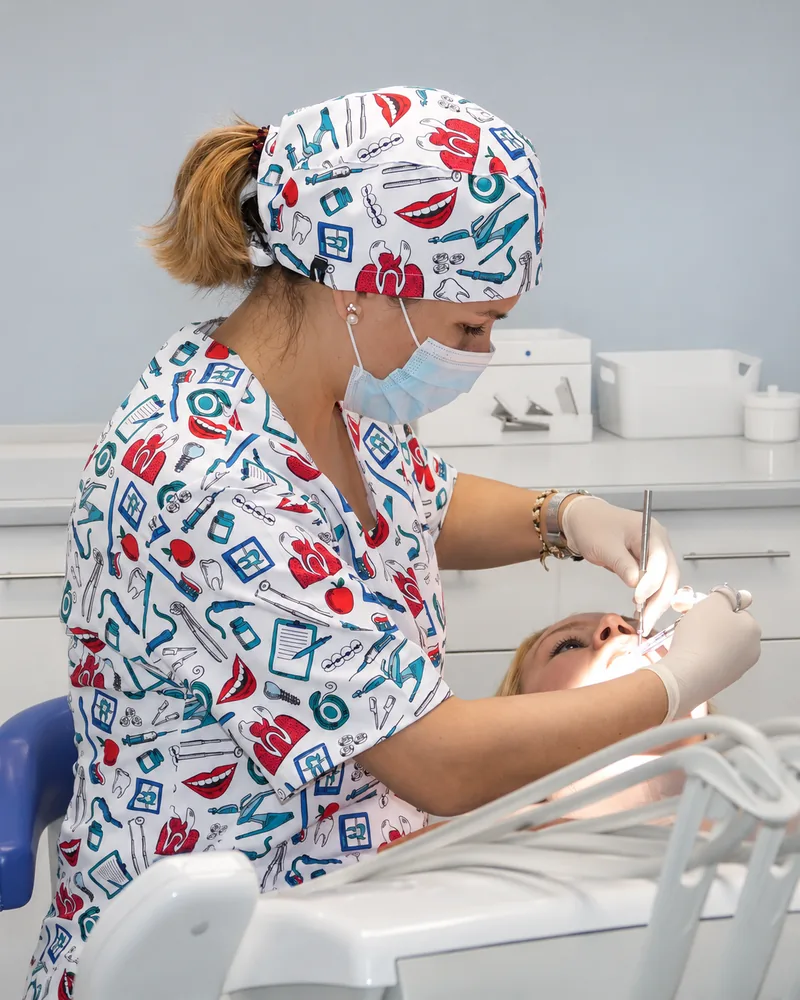
Dentists and orthodontists: understanding their roles
Choosing a suitable oral health professional is essential to ensure optimal dental care. In this article, we will explore the key differences between dentists and dentists.

The choice of a suitable oral health professional is essential to ensure optimal dental care. In this article, we will explore the key differences between dentists and orthodontists, from their training and treatment approach to the target audience they serve.
Training and specialization are fundamental aspects that distinguish dentists from orthodontists. Dentists complete a bachelor's degree in dentistry and are trained in a wide range of general and preventive dental treatments. On the other hand, orthodontists are dentists who have completed specialization studies in orthodontics after obtaining their degree in dentistry, allowing them to treat dental alignment problems and malocclusions in a more specialized way.
As for the treatment approach, dentists focus on comprehensive oral health and offer services for prevention, diagnosis and treatment of oral diseases, as well as dental restorations and periodontal treatments. On the other hand, orthodontists specialize in correcting dental alignment problems and malocclusions by using devices such as braces and clear invisible aligners.
This article will also discuss the common treatments performed by dentists and specialized treatments performed by orthodontists, as well as the target audience that each attends. In addition, the costs and financing of dental and orthodontic treatments, as well as the average duration of each type of treatment, will be addressed.
In short, knowing the key differences between dentists and orthodontists is essential for choosing the right professional according to the dental needs and the required treatment. By understanding the areas of specialization and treatment approaches of each, patients can make informed decisions and receive the most appropriate dental care for them.
Requirements for being a dentist
Being a dentist requires specific education and training in dentistry. To become a dentist, it is necessary to complete a bachelor's degree in dentistry, which is usually a five-year program. During these studies, future dentists acquire theoretical and practical knowledge about oral health, dental anatomy, prevention and treatment of dental diseases, as well as the clinical skills needed to perform dental procedures.
In addition to the degree, it is important to meet certain requirements for being a dentist. These may vary according to country and local regulations, but generally include obtaining a professional license or college, which is achieved by passing a national or regional exam. It is also necessary to keep up to date on the latest advances and techniques in the field of dentistry through continuing education courses.
Being a dentist requires a bachelor's degree in dentistry and meets certain requirements, such as obtaining a professional license and staying up to date in the field through continuing education courses. 
Requirements for being orthodontist
To become an orthodontist, it is necessary to be a dentist first. After completing a degree in dentistry, professionals interested in orthodontics must carry out a specialisation program in this area. These programs usually last for three years and focus on the diagnosis and treatment of dental malocclusions, as well as the placement of devices and the use of corrective techniques.
After completion of the specialisation program, dentists can obtain certification as orthodontists. This certification may vary according to country and local regulations, but it is generally required to pass an exam and meet the requirements established by the corresponding orthodontist college.
To be an orthodontist, you first need to be a dentist and complete a specialisation program in orthodontics. Then, you get certification through an exam and complying with the established requirements. It is important to note that dentists and orthodontists must continue their education and training throughout their career in order to keep up with the advances of dentistry and offer the best care to their patients.
Treatment approach
The treatment approach of a dentist and orthodontist differs depending on their areas of specialization and the specific problems they address.
Dental services offered by dentists
A dentist or dentist takes care of the general oral health of patients. Its main objective is to maintain the teeth, gums and bones that support them in optimal conditions. Dentists perform regular examinations, detect and treat caries, gum disease and oral hygiene problems. In addition, they can perform dental extractions and improve the function and appearance of the teeth through obturations, dental veneers or crowns. They can also rehabilitate dental absences through bridges, removable prosthetics and osteointegrated implants. In addition, dentists check inside the mouth for signs of oral illness and provide advice on how to maintain oral health.
Orthodontic services provided by orthodontists
Orthodontists specialize in correcting the alignment of teeth and improving bite. They use braces and corrective devices to achieve a good dental position and correct denture structure. The orthodontic services they provide include the placement of braces, whether conventional or aesthetic, as well as lingual orthodontics and invisible orthodontics. These treatments are essential to correct problems such as stumped teeth, malocclusion and poor bites caused by injuries, early or late loss of teeth, or habits such as thumb sucking. In addition to these aesthetic benefits, orthodontics can also prevent serious problems such as gum disease, loss of teeth, and difficulties in brushing and properly cleaning teeth.
Dentists focus on general oral health and treat a wide range of problems, while orthodontists specialize in correcting the alignment and bite of teeth. Both professionals are dentists, but orthodontists complete additional training after graduating in dentistry.
It is important to note that dentists and orthodontists are highly trained professionals and prepared to provide the best dental treatment for each patient. In addition, working together can be beneficial for patients, as they can receive a comprehensive and specialized treatment approach.
Treatments performed
As a dentist, my main objective is to ensure the oral health of my patients and provide them with the specific treatments they need. Below, we describe the common treatments performed by dentists, as well as the specialized treatments carried out by orthodontists.
Common treatments performed by dentists
As a dentist, I am responsible for evaluating and treating a wide range of dental problems. Some of the common treatments performed by dentists include:
- Regular revisions: Dentists perform routine oral tests to detect early problems and prevent dental diseases.
- Caries treatment: Dentists can treat and repair teeth damaged by cavities by removing cavities and placing shutters.
- Treatment of gum diseases: Dentists also treat gum diseases, such as gingivitis and periodontitis, through deep cleaning and other appropriate treatment techniques.
- Dental extractions: Dentists can irreversibly remove unsaved or damaged teeth to improve the patient's oral health.
- Dental restoration: Dentists can improve the function and appearance of teeth by fillings, dental veneers or crowns.
- Oral rehabilitation: Dentists can also rehabilitate dental absences through bridges, removable prostheses and osteointegrated implants.
Specialized treatments performed by orthodontists
On the other hand, orthodontists specialize in correcting the alignment of teeth and improving bite. Some of the specialized treatments performed by orthodontists include:
- Orthodontics with braces: Orthodontists use braces to align and correct the position of patients' teeth.
- Language orthodontics: They also perform lingual orthodontic treatments, in which the braces are placed on the back of the teeth.
- Invisible Orthodontics: Orthodontists can use clear aligners and custom, such as Invisalign, to fix the position of teeth discreetly.
- Correction of deficient bites: Orthodontists treat poor bites caused by injury, early or late tooth loss, or habits like sucking your thumb.
Dentists take care of general oral health and treat a wide range of problems, while orthodontists specialize in correcting the alignment and bite of teeth. Both professionals are dentists, but orthodontists have completed additional training after graduating in dentistry.
Target audience
In the field of dentistry, the target audience covers both children and adults of all ages. Dentists and orthodontists provide oral care services and specific treatments for people who need to maintain their oral health or correct dental problems.
- – For dentists, their target audience are patients of all ages who require general oral health services. Dentists can treat problems such as caries, gum disease, tooth extraction, fillings and other procedures aimed at maintaining the health of their patients’ teeth and gums.
- – On the other hand, orthodontists focus on the treatment of dental alignment and malocclusions. Their target audience is mainly composed of people who need to correct the position of their teeth, improve their bite and get an aesthetically pleasing smile. Patients can be children, adolescents or adults who want to improve the appearance and function of their teeth.
Both dentists and orthodontists have a broad and diverse target audience that includes people of all ages who seek to maintain good oral health or need to correct specific problems related to their teeth and gums.
Typical dental consultation
During a typical consultation with a dentist, the patient may expect to receive a number of general dental care services, including:
- – Dental examination and X-rays: The dentist will examine the patient's teeth and gums, and may also request X-rays to evaluate the internal structure of the teeth.
- – Dental cleaning: a deep cleaning is done to eliminate plaque and tartar accumulated in the teeth, which contributes to the prevention of cavities and gum diseases.
- – Caries treatment: if a cavity is detected, the dentist can perform a filling or duct treatment to save the affected tooth.
- – Dental extractions: in cases where a tooth cannot be saved, the dentist may recommend extraction.
- – Oral hygiene education: the dentist provides tips on how to maintain good oral hygiene and prevent future dental problems.

Typical orthodontist consultation
In a typical consultation with an orthodontist, the patient may expect to receive specific services related to dental alignment and correction of malocclusions. Some of the procedures performed during an orthodontic consultation include:
- – Evaluation of dental alignment: the orthodontist will examine the position of the patient's teeth and jaw to determine if there are malocclusions or alignment problems.
- – Treatment plan: a personalized treatment plan is created to correct any dental alignment problems. This may include the placement of conventional braces, aesthetic braces or invisible orthodontics.
- – Regular monitoring: the orthodontist will perform periodic reviews to verify the progress of the treatment and make the necessary adjustments.
- – Retention: Once the orthodontic treatment is finished, a retainer should be used to prevent the teeth from becoming misaligned again.
Typical dental and orthodontist consultations differ in the services they offer. While the dentist focuses on general oral care and the treatment of problems such as tooth decay and gum disease, the orthodontist specializes in correcting dental alignment and malocclusions. Both professionals play a crucial role in dental care and contribute to maintaining good oral health for their patients.
Cost and financing
Costs of dental treatment
A dentist, also known as a dentist, is responsible for general oral health They perform regular examinations, detect and treat caries, gum diseases and oral hygiene problems. They can also remove non-saved teeth and improve the function and appearance of teeth through obturations, dental veneers or crowns. In addition, they rehabilitate dental absences through bridges, removable prosthesis and osteointegrated implantsThey check inside the mouth for signs of oral illness and advise on how to maintain oral health.
Costs of orthodontic treatments
An orthodontist specializes in correcting the alignment of teeth and improving bite. They use corrective devices and devices, such as common brackets, linguistic orthodontics and invisible orthodonticsThey treat poor bites caused by injuries, early or late loss of teeth, or habits like sucking your thumb. Orthodontics can also prevent problems such as gum disease, loss of teeth, and difficulty brushing and properly cleaning your teeth.
As for the costs of dental treatments, they may vary depending on the type and severity of the dental problem to be treated. Some of the most common treatments and their average costs include:
- Obstructions: the cost of a shutter can range from 50 to 300 euros.
- Dental extractions: the cost of dental extraction can vary between 80 and 150 euros.
- Dental implants: the cost of a dental implant can range from 800 to 2000 euros.
As for the costs of orthodontic treatments, these may also vary depending on the type of treatment and the duration of the treatment. Some of the most common treatments and their average costs include:
- Metal bracelets: the cost of metal brackets can range from 1500 to 4000 euros.
- Invisible Orthodontics: The cost of invisible orthodontics can vary between 2500 and 6000 euros.
It is important that each patient consult with his dentist or orthodontist to get a budget and analyze available funding options, such as payment plans or dental insuranceOral health is a long-term investment and having a proper budget and financial plan will facilitate the treatment needed to maintain a healthy mouth and a beautiful smile.
Duration of treatment
The duration of dental treatment varies depending on the type of procedure and the severity of the dental problem. In general, dental treatments may last from a few weeks to several months or even years.
For common dental problems such as caries and gum disease, treatment can be relatively rapid, usually taking only a few visits to the dentist to complete. Simpler procedures such as fillings and tooth extractions can be performed on a single appointment, while other treatments such as endodontics or crown placement may require multiple visits.
On the other hand, orthodontic treatments tend to last longer. The main goal of orthodontics is to correct the alignment of teeth and improve bite. Orthodontic treatments can last on average 1 to 3 years, depending on the complexity of the case.
Average duration of dental treatments
General dental treatments may have different durations depending on the specific procedure:
- Obstructions: They are usually completed in a single visit, which can last about 1 hour.
- Endodontics: may require multiple visits, with an average duration of 1 to 2 hours per visit.
- Dental extractions: can be performed on a single appointment, with an average duration of 30 to 60 minutes.
- Dental implants: may require several visits and a period of healing, with a total duration of several months.
Average duration of orthodontic treatments
Orthodontic treatments may also have different durations, depending on the severity of dental malocclusion and the type of device used:
- Conventional braces: Treatment may last on average 18 to 36 months, with regular visits to the orthodontist every 4 to 6 weeks.
- Invisible Orthodontics: Also known as Invisalign, treatment usually lasts similar to conventional braces, but may vary depending on the individual case.
- Language Orthodontics: This orthodontic option uses braces placed on the back of the teeth, which can prolong the duration of treatment compared to conventional braces.
It is important to note that these are only average and the actual duration may vary according to the individual needs of each patient.
In summary, it is important to highlight the main differences between a dentist and an orthodontist. Dentists are dental health professionals who offer a wide range of general dental services, such as cleaning, filling and extraction. On the other hand, orthodontists are specialists in the alignment of teeth and correction of bite problems through the use of orthopaedic devices and orthodontic treatment. If you want to learn more about these differences and explore in depth each of the topics mentioned above, we invite you to read other articles available in our ODONTOFAMILY blog. Within our blog, you will find complete information on training and specialization required to become a dentist or or orthodontist, the different types of treatments offered by each specialist, the target audience to which each of them is addressed, the associated costs and financing and the average duration of treatments. Do not hesitate to visit our blog for detailed and accurate information on these topics and many more related to dentistry. We expect you at ODONTOFAMILY!
General oral health information. Your dentist’s assessment is needed to tailor any recommendation to your individual circumstances.
Keep reading the blog