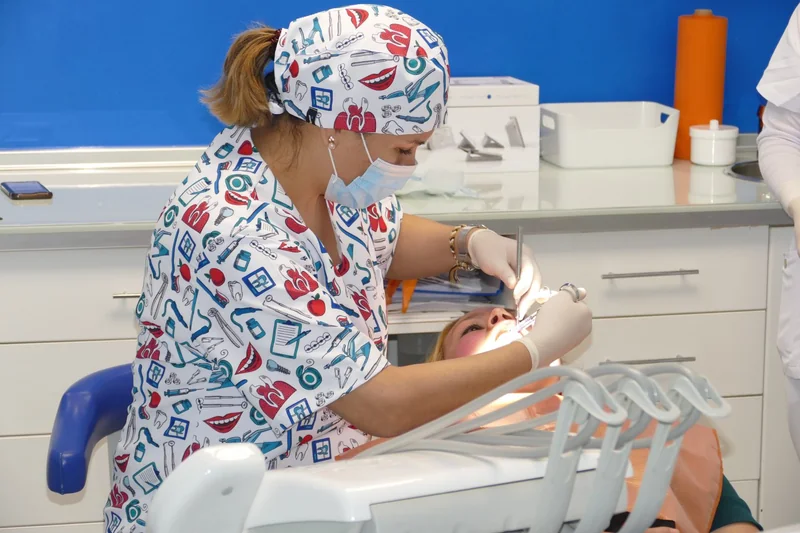
Gingivectomy and crown lengthening
Crown enlargement or gingivectomy is an easy surgical treatment to perform. It is a prescription treatment for certain periodontal diseases or to correct the gingival smile. If it is your case, and you want to have the teeth you have always dreamed of, change your gingival smile in Bilbao Forever.
What is a gingivectomy?
gingivectomy, also known as crown enlargement, is an outpatient surgery that consists of to reduce the amount of gum in the toothThis surgery is recommended to remove lesions or reduce the periodontal bag. It is also usually recommended for aesthetic purposes.
Gingivectomy is a process that prevents serious problems in periodontal bags that could cause the destruction of the bone of the support and worsen the periodontal condition.
It's a very invasive surgery that use local anesthesiaFor that reason, it is a surgery that is not painful at all.
Postoperative gingivectomy
The post-operative of gingivectomy is one of the simplest among oral surgeries. Among the care prescribed by the dentist are: the use of painkiller to relieve pain and improve recovery; antibacterial mouthwashes to prevent infections; good dental hygiene to prevent infections; and the use of soft bristles brush to not hurt the gum and allow its rapid recovery.
What's the procedure like?
The first step of gingivectomy is that the dentist will make sure, in most cases, that the patient has been previously performed dental cleaning. In this way, the excess tartar and all the dirt that causes the gums to inflate will be removed. In addition it prevents infections.
Entering directly into the surgical process, the first thing the dentist does is a aesthetic analysis of the smile. In this way, you can determine what is the excess gum that will be cut. From here, these are the steps that follow:
- Evaluate the depth of the periodontal bag. For this, periodontal probe, one of the tools that measures the depth of the periodontal bag, as well as the accumulation of bacteria, is used. In this almost, it is used for the first purpose.
- Indicate the line where the incision is to be made. You can use the periodontal probe for this or a mock-up to indicate the height at which the incision will be made. A previous waxing is done.
- The incision is made in the gum. Then follow the marked line. It starts at the end of the marked points.
- The leftover tissues are removed. Then the leftover tissues are removed with a scalpel, electrobastic or laser.
- The gingival tissues are softened. A rotary instrument is then used to soften gingival tissues.
- The area that received the operation is protected. Surgical cement is placed to care for the area of the gums operated and care for any infection or sensitivity.

gingivectomy and gingivoplasty what's the difference?
gingivoplasty is very similar to gingivectomy. The main difference is that this surgery is used to give more aesthetic contours to the gums. In this way, the gums remain the same size and maintain an appropriate shape. In many cases, gingivectomy precedes gingivoplasty to give a better appearance to the gums.
However, in a strict sense both surgeries are different. Both surgical processes work in gums, but the second is more focused on aesthetics than on gum health.
gingivectomy is simply a gum shortening, while gingivoplasty remodels the gum and polish the edges to give a better appearance.
In what cases is it necessary?
Gingivectomy is primarily indicated for patients who, due to periodontal disease, its periodontal bags have reached more than 3 mm depth.
This surgery is also indicated when there is bone loss that impairs all periodontal health. In this case, bone surgery is applied to treat any gum-related problems that are causing the problem in the bones.
Gingivectomy is also prescribed for patients who suffer from pathologies such as hyperplasia or gingival fibrosis. Surgery helps reach those periodontal bags that are not accessible. This allows better treatment of periodontal diseases, since it allows access to them easily to restore them.
Gingivectomy and Gingival Smile
The elongation of crowns also applies to those who want to give solution to the gingival smile. The gingival smile is the deformity that makes it show a excess gums when smiling.
This is due to a lack of proportions between teeth, gums and upper jaw. In this sense, it is mainly used for aesthetic purposes. Although gingival smile can occur due to major problems in the periodonth, and in such case, it is done to improve periodontal health.
And what causes the gingival smile? Here are some of the reasons:
- Inflammation due to poor oral hygiene.
- Oral breathing.
- Short lip.
- Passive rash altered.
- Too much vertical size of the upper jaw.
- Gums and bone with thick, fibrous biotype.
Advantages of gingivectomy
As we have said before, gingivectomy is a surgery that reduces periodontal bags and treats other periodontal diseases.
However, this surgery also has aesthetic benefits in addition to doctors, such as:
- More visibility of the tooth. By reducing gum, the teeth look larger and longer, and are not dulled by excess gum.
- Better smile. It considerably improves the appearance of the smile. The greater visibility of the teeth and the reduction of the gums makes it look a better smile.
- It does not cause pain and post-operative is simple. The operation does not produce any pain and post-operative treatment is easy to carry.
- Visible and satisfactory results. The results of gingivectomy are very remarkable. Teeth and smile change completely.

Inconvenient gingivectomy
In a strict sense, no contraindication to gingivectomy is known. However, people with certain pathologies need to receive certain special care to avoid problems, such as those with clotting problems or antibiotic prophylaxis.
Post-gingivectomy scarring is good and relatively fast. However, some complications may occur, such as:
- Bleeding and infections. Infections and bleeding are very rare, but may occur in some patients.
- Dental sensitivity. There is a low probability of dental sensitivity due to bone exposure, but some patients do.
- Pain in eating food. For 48 to 72 hours you may feel pain when you eat, as the tissue is still very sensitive. There may also be bleeding for the first 24 hours after surgery.
- Tears in healthy tissue or injured nerves. Tears may also occur in the tissue near the gum that is healthy.
What care should be taken after a gingivectomy?
The recovery is relatively rapid, it occurs between the six weeks and the monthAnd the results will begin to be seen 6 months after surgery.
The main thing is to maintain proper dental hygiene and use a soft bristles brush. You can also use floss, but as much care. To feel relief, you could put a cold compress for 5 minutes several times a day.
During the recovery time you should avoid cigarette, alcoholic beverages, as well as acidic or high-salt foods. It is also not advisable to eat too cold or hot foods or drinks after treatment. It is better that they are at room temperature.
General oral health information. Your dentist’s assessment is needed to tailor any recommendation to your individual circumstances.