Orthodontic treatment for children
The development of children's teeth is a subject of great interest to almost all parents. Especially, because most of us want our children to grow up with healthy and aesthetic teeth.
To this end, children's teeth should be treated from an early age, as this can correct problems during development and facilitate further treatment. In this post, we will help you to answer all your doubts about child orthodontics.
First visit for children to the dentist
The most appropriate age to perform the first review is a 6 years. It is where the first molars develop, the maxillary bones grow and the incisors have already come out. In addition, the growth of the maxillary bones and the milk teeth can be evaluated in advance.
This first visit is important, since it allows the dentist to discover any problems with the development of teeth or jaws and correct them in time. In fact, when these treatments are performed in advance, the correction of bite and alignment of teeth are easier to correct.
Another important age for screening children's teeth is a 12 years. At this age the maxillae are also developing and the development of permanent teeth is about to end.
What kind of child orthodontics exists
There are two types of orthodontics that can be applied to children. These depend mainly on the age of the child and the state of his or her teeth.
Interceptive orthodontics
This is a type of orthodontics that children can easily put on and off. That is, they are not fixed. This type of orthodontics is for children who only have temporary dentition (milk teeth) or mixed.
In this case, plates are used that are made of acrylic materials. These plates use fastening hooks that are attached to the dental arcade.
This type of orthodontics is used for three main purposes: to displace some particular teeth, as necessary; to correct the posterior cross bite; and to extend the tooth arch.
In order for this treatment to work, children must use the devices for a minimum period of time per day as the dentist deems necessary. This consideration is important, since children can remove these devices before due time, which would significantly affect the outcomeThat is why parents should be careful that children use these devices for the proper time.
It is normal for children to feel discomfort the first few days when using removable devices. But they will get used to it relatively quickly. Interceptive orthodontics lasts for a long time. 6-18 months.
Benefits of Interceptive Orthodontics
Here are some advantages of interceptive orthodontics:
- You can correct the growth of the jaw and jaw in order to align well the milk teeth.
- Detecting and correcting bad habits that can cause the bad development of maxillae, such as: pressing your teeth with your tongue or sucking your finger.
- Reduce the risk of damage to permanent teeth when they develop.
- The most common are cross-bite, overbite, and open bite.
- Facilitating fixed orthodontic treatment in the future.
Fixed orthodontics
Fixed devices are placed after all temporary teeth have been replaced and the permanent ones have emerged. Fixed orthodontics are performed approximately at 12 years of age.
Removable devices are not a prerequisite for the use of fixed devices. That is, children can use fixed devices regardless of whether they have used removable or not in the past.
Moreover, the use of interceptive orthodontics does not mean that the child should not use fixed devices in the future. Indeed, many children use fixed devices, despite having received such treatment in the past. However, it has a great advantage, since the fixed treatment is much simpler and faster.
The fixed devices most used by orthodontists are braces. different types of bracketseach with its own benefits.
- Metal bracelets. They are the cheapest brackets, but they are very visible.
- Sapphire bracelets. The advantage of this type of braces is that they are very aesthetic. Since they are transparent, they go unnoticed with the color of the enamel. But they are more expensive than those of metal.
- Ceramic bracelets. They are also aesthetic, but unlike sapphire, they are dyed over time.
- Incognito lingual braces. These are placed on the inner side of the tooth. So they are 100% invisible. However, very rarely placed in children. They are also the most expensive on the market.
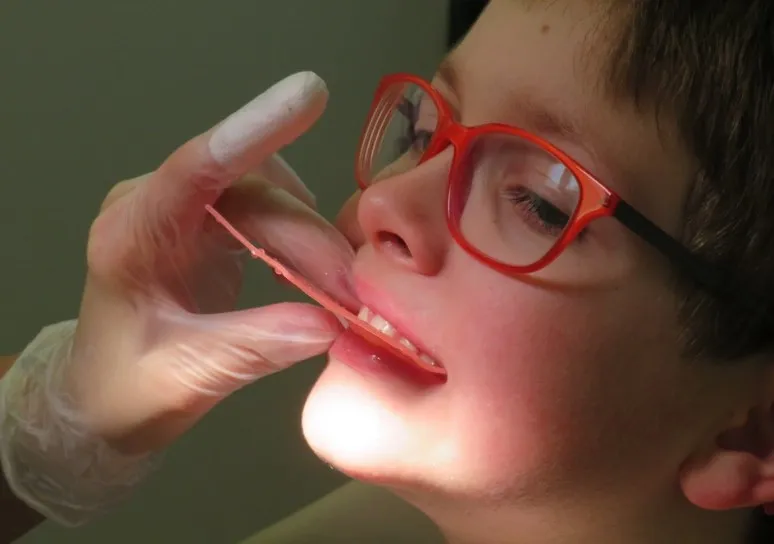
The most recommended braces for children are metal bracelets with colored rubbers. In addition to being the most economical, colored rubbers provide a fun experience for children. In children, what is most sought is not the aesthetic, but the efficiency and economics of the treatment.
Benefits of fixed orthodontics
These are the benefits of fixed orthodontics.
- Low cost and effective results.
- Align the bite.
- Solutions jaw problems.
- Improve bad dental habits.
General oral health information. Your dentist’s assessment is needed to tailor any recommendation to your individual circumstances.