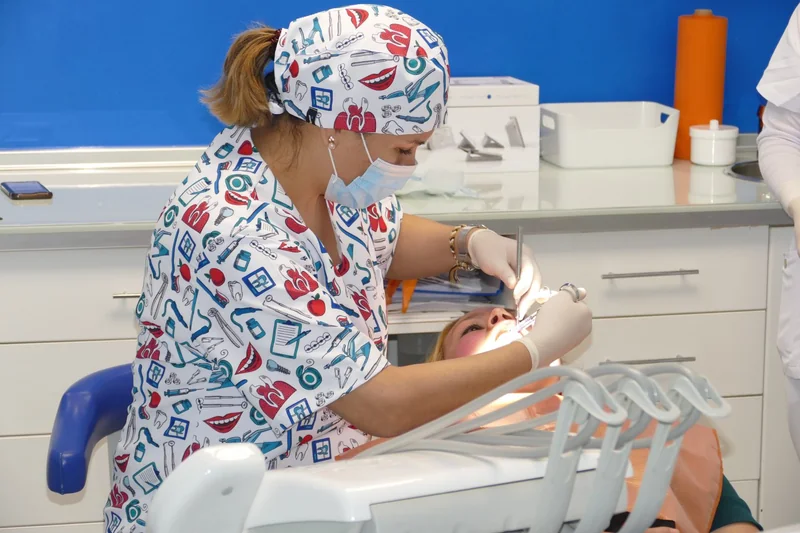
What is professional dental cleaning?

A beautiful smile begins with a healthy mouth, and the basis of all oral maintenance is, without a doubt, the professional dental cleaning Although we brush our teeth daily, there are hard-to-reach areas where tartar tends to accumulate, putting the health of our gums at risk.
In our dental clinics, we understand that each mouth is unique. Therefore, we combine the experience of our hygiene specialists with the most advanced technology in the sector to guarantee painless and effective treatments. If you are looking for an accurate and honest diagnosis about the real state of your mouth, we invite you to visit us at Bilbao and Getxo.
Looking for a trusted dentist in Bizkaia? In ODONTOFAMILY We have clinics located in Bilbao and Las Arenas (Getxo). We are specialists in integral dentistry, orthodontics, dental aesthetics and implantology. Our team offers you personalized treatments with the most advanced technology. If you live nearby and need a review, ask for your first evaluation appointment with us!
Book your visit in ODONTOFAMILY
What is a dental cleaning?
A dental cleaning is a clinical procedure aimed at eliminating the bacterial plaque and mineralized tartar that the toothbrush fails to remove. Unlike daily hygiene, this process uses specific apparatusology, as state-of-the-art ultrasound tips, to disembowel deposits that cause inflammation and bad breath.
It is not just an aesthetic issue; it is the pillar of prevention to avoid caries and gingival problems in the long term.
Difference between dental cleaning and curing
It is vital not to confuse both terms, and here is where the importance of accurate diagnosis Come into play.
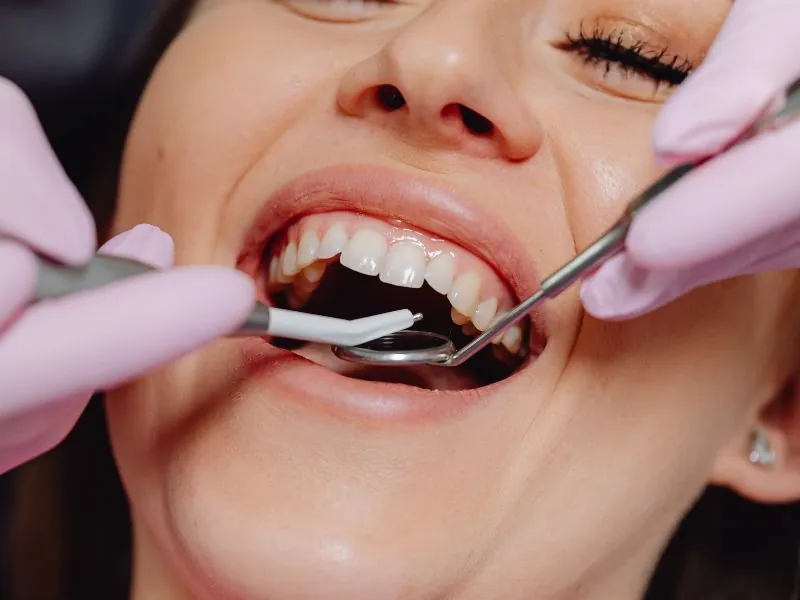
- Dental cleaning (Prophylaxis): It is done on the visible part of the tooth and slightly below the gum. It is indicated for patients with healthy gums or mild gingivitis (reversible inflammation).
- Curetage (radicular scraping and straightening): It is a deeper treatment necessary when periodontitis (loss of bone) exists. Here it is thoroughly cleaned under the gum, reaching the root of the tooth to remove periodontal bags.
In our centers of Bilbao and GetxoWe evaluate your particular case to determine if you need a more advanced maintenance cleaning or periodontal treatment.
How Long a Dental Cleansing Must Last
There is no fixed time, as it depends on the amount of accumulated tartar and the patient’s collaboration. However, quality prophylaxis should not be done in a hurry.
To ensure thorough removal of bacteria and perfect polishing, treatment usually requires between 40 and 60 minutes. Confess the “express” cleanings of 15 minutes; they are usually superficial and leave bacterial remains that can lead to major problems.
How long it takes to clean your teeth
As a standard, book about 45 minutes on your schedule. This time includes ultrasonic cleaning, the use of aeropulitors to remove surface stains (coffee, tobacco) and final fluorization.
Our philosophy is to devote the necessary time to each patient, prioritizing a thorough result and comfort thanks to our cutting-edge technology, above speed.
Learn more about dental cleaning in our clinic Here..
How often you have to have a dental cleaning
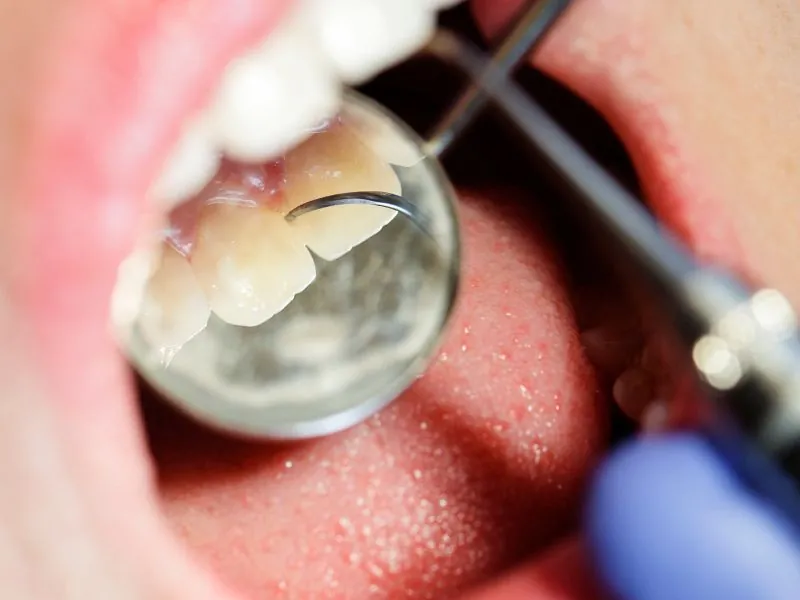
The general recommendation is to make it once a yearHowever, each patient has a different risk:
- Healthy patients: Every 12 months.
- Patients with orthodontics or implants: Every six months.
- Patients with a history of periodontitis: Every 4 or 6 months.
The ideal is to go to a consultation to schedule your personal hygiene calendar.
After a dental cleaning I can eat
Yes, you can eat, but with caution. If fluoride has been applied, you should wait at least. 30 minutes before eating food or drink for the product to take effect.
If your gums were swollen, you may feel a certain sensitivity. In that case, wait for the discomfort to pass on and avoid chewing very hard foods for the first few hours.
Care after dental cleaning
To maintain the results and avoid discomfort, follow these tips for the first 24 hours:
- Use a soft bristles brush.
- Don't put too much pressure on brushing.
- Use dental floss or interproximal brushes gently.
- If you notice sensitivity, use a specific desensitizing toothpaste.
Food prohibited after dental cleaning
For the first 24-48 hours, the tooth is more receptive. To avoid dyeing or causing pain, avoid:
- Foods with a lot of coloration: Coffee, red wine, black tea, beetroot, red fruits or soy sauce.
- Acidic foods: Citrus fruits, vinegar or tomatoes (may increase sensitivity).
- Extreme temperatures: Very cold or very hot foods can cause acute discomfort (reversible pulpitis).
Holes after dental cleaning
It is common for patients to feel “spaces” between their teeth after cleaning and think that the part has been damaged. This is a myth..
That space was always there, but it was occupied by tartar and inflamed gum. By removing tartar and lowering inflammation, the real anatomy is revealed. This is a positive sign of health. Thanks to our enamel-friendly technology, we clean these spaces without damaging the dental tissue.
Infection after dental cleaning
It is extremely rare to develop an infection after cleaning; in fact, the aim is to cure it. However, when handling gums, a mild bacteremia occurs. In healthy patients it is not a risk, but in people with specific cardiac pathologies or recent prosthetics, antibiotic prophylaxis may be required under medical prescription.
It can combine dental cleaning and whitening
It's the one. correct command. Before a whitening, the tooth surface must be plate free for the gel to penetrate effectively. Many of our patients take advantage of the visit to heal and then illuminate their smile.
Dental cleaning pros and cons
Pros:
- Prevents tooth loss and periodontal diseases.
- Eliminates bad breath (halitosis).
- Improves aesthetics by removing superficial stains.
- It allows the specialist to detect incipient caries in time.
Cons:
- It can generate a slight transient dental sensitivity (disappears within a few days).
- There may be a slight bleeding of gums during the process if there is a lot of prior inflammation.
Dental cleaning price
The price varies according to complexity, but it is important to view it as an investment that avoids future expensive treatments (such as endodontics or implants).The cost depends on the technology employed and the specialization of the hygienist.
If you are looking for a clear budget, we encourage you to approach our clinics Bilbao or GetxoWe do not sell generic treatments; we make a precise diagnosis to give you just what you need.
Frequently Asked Questions
How to relieve pain after a dental cleaning?
If you feel discomfort, avoid very cold or acidic foods. You can use desensitizing pharmaceutical gels or take a mild painkiller if necessary, although it is usual for the discomfort to go away alone in a few hours.
Does it hurt to have a dental cleanse?
It shouldn't hurt. modern ultrasound technology We use in our clinics, vibration is much smoother, minimizing discomfort. If you have a lot of sensitivity, discuss it with us; there are topical anesthesia options to ensure your comfort.
Is it normal for my gums to bleed during cleaning?
Yes, it is relatively normal, but not because of the cleaning, but because of the previous inflammation (gingivitis) Bleeding is the response of the sick gum to being touched. Precisely, cleaning is done to eliminate the bacteria that cause that bleeding and restore health to your tissues.
How much does a tartar dental cleaning cost?
The price is the same as a standard cleaning, unless the tartar is deep under the gum. In that case, we would talk about a scraping or curing. A professional diagnosis is the only way to know what treatment your mouth requires.
General oral health information. Your dentist’s assessment is needed to tailor any recommendation to your individual circumstances.