A narrow or high-arched palate
The narrow palate is often the cause of many problems in the teeth and upper jaw, such as cross-bite or stacking of teeth. And even, breathing may be affected.
The good thing is that there are treatments to improve the narrow palate and improve the pathologies that come as a consequence. Luckily, this is a very common case, so the dentists Getxo have studied all kinds of solutions. Talks of narrow palate.
What is the narrow palate or ojival palate?
It is known as narrow palate to the condition in which the upper jaw bone is narrower than the lower jaw. The natural form of the mouth is that the upper jaw is always wider than the lower jaw, causing the upper teeth to protrud a little from the lower teeth. This is the way our mouth works properly and chewing. If you suspect that you have an ojival palate and would like to treat it, you can turn to our mouth. dentist Bilbao.
The title ojival palate is a term derived from the arches made in Gothic architecture, which were pronounced and narrow, but at the top its angle was considerably lower than that of the lower part. The narrow palate usually has the form of these arches and that is why it is called in that way.
How do I know if I have a narrow palate?
The narrow palate is a more common dental oral pathology than you think. This pathology usually manifests in three ways:
- Cross bite. This is the most common manifestation of the narrow palate. This happens when one of the two sides of the upper jaw bites within the lower jaws. In other words, the teeth on one side of the jaw bite inside the teeth on the lower side. The correct way is for the upper arch to bite a bit outside the lower arch. If the opposite occurs, it is called cross bite.
- Severe stenching. As it is named, it occurs when the teeth are fastened to each other. Teeth mounted, rotated, superimposed, inclined, etc. are a manifestation of this pathology. Teeth already have a thickness, width or length suitable. But when this condition is present, they usually have no space and are placed wherever possible. This is a condition that is produced by the lack of space in the maxilla.
- Teeth tilted inward. It is also known as compensated teeth. This happens when the lower teeth lean inward towards the tongue. This happens because the teeth try to compensate for the problem of narrow jaw. Teeth look for the most comfortable way to bite and this inclination is caused that is not healthy for the chewing apparatus.
What are its causes?
The narrow palate may have different causes. The following are the most common:
- Genetic factors. This is a pathology that can be inherited from our parents or ascenders.
- Breathing through the mouth since childhood. Children who have difficulty breathing through the mouth and cannot breathe through the nose often have this problem.
- Atypical swallowing. Atypical swallowing occurs when the tongue pushes the upper or lower incisors at the time of swallowing.
- Bad habits of sucking your fingers or using nipples. Using pacifiers or sucking your fingers can trigger this problem in children.
- Premature fall of milk teeth. Although it seems insignificant, it can cause maxillary health problems.
Consequences of the narrow palate
The most serious consequences of narrow palates may be more noticeable in adults. These are the most common problems:
Premature wear of teeth
The tendency of teeth is to allow chewing function. In this trend, they can take different positions and angles to compensate for the problem of upper jaw space. However, those positions and angles are often inadequate and produce premature tooth wear. This distancing can become such that the teeth can break.
ATM pain
ATM are the acronyms of temporomandibular joint, this is the joint that connects the jaw and head, and is very close to the ear in that connection. This joint can be affected by the compensatory position that the teeth take to bite. And it is the cause of muscle pain (in the jaw muscle), headache and weary changes of the joint.
Toothprinting
Having a narrow palate means that on many occasions there will not be the space required for all teeth to take their right position. This gives light to severe dental stacking. This jointing in turn leads to the production of bacterial plaque and accumulation of tartar in the teeth. These tend to be more conducive to periodontal diseases and caries.
Gum recessions and periodontal problems
gingivitis and periodontitis are produced by the accumulation of bacterial plaque. These pathologies are caused by the malposition of the teeth. If you believe have periodontitis please go to your trusted dentist to begin treatment.
Respiratory problems
The narrow palate can cause breathing problems. It is difficult to pass through the air, since the bad development of the palate makes the nasal soil narrower. That is why it is normal for people who treat their narrow palate problem to have an improvement in their breathing.
Digestive problems
The narrow palate makes It's harder to chew And badly crushed foods make digestion difficult and cause stomach problems.
How to correct in narrow palate
Treat the narrow palate between children aged 6 and 12 It is simpler, since the bones are still in development and have not been finished welding. It is best to treat this problem as a child since so you do not have to resort to any type of surgery.
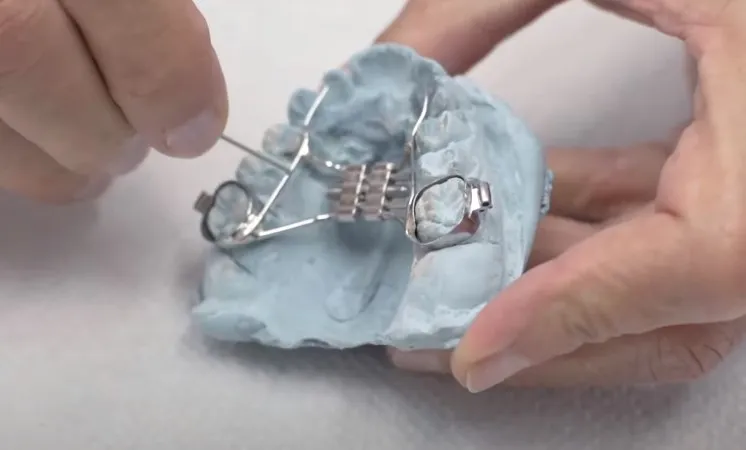
When the child is at that age, the palate has two divisions that bind through a cartilage. That cartilage can be molded and enlarged using an apparatus called RPE or palatine circuit breaker. This device must be carried on a fixed basis for one year Then, the palate will continue to develop in a normal way and may even improve breathing.

In adults, however, treatment is a little more complex. The first thing to do is to make a diagnosis of the cause of the problem through a 3D review.
If the cause is a dentoalveolar problem because it affects teeth and alveolar bone, the best solution is to apply those treatments that help move teeth, such as braces, invisalign or invisible lingual.
But when the problem is found in the width of the basal bone not only will it be enough to move the teeth. In such a case, the solution is to move the basal bone. No braces can solve the problems of the basal bone.
In these treatments, a palatine circuit breaker is used. The palatine circuit breaker is one of the most efficient expansion devices to treat the narrow palate. It corrects the problems of maxillary width and palate. In children it adheres with bands on molars and in adults it is fixed with orthodontic mini-screws.
To perform skeletal expansion in adults, you can choose two treatments. One is SARPE and the other is MARPE.
Surgically Assisted Rapid Palatine Expansion (SARPE)
SARPE comes from the English acronym Surgically Assied Rapid Palatal Expansion. It is an outpatient surgery, so the patient can go home after surgery.
Through surgery, the maxillofacial surgeon releases the maxilla and a tooth-rested circuit breaker is placed. This process helps expand the palate. This is the least invasive treatment. The space created by the surgery closes in a few months.
Palatine circuit breaker anchored in orthodontic mini-screws (MARPE)
MARPE comes from the acronyms Miniscrew Assied Rapid Palatal Expander. It is the circuit breaker that is used in adults. It is anchored directly into the bone and applies strength to the bones to expand them, without bothering the patients' teeth.
This treatment produces excellent results. In just one week, you can begin to see the first results and how the maxilla is opening up.
General oral health information. Your dentist’s assessment is needed to tailor any recommendation to your individual circumstances.